Comment le bêta-caryophyllène (BCP) et les récepteurs CB2 peuvent aider à combattre la maladie d'Alzheimer
Un examen exhaustif des preuves précliniques, et pourquoi le BCP et l'alpha-pinène, ensemble, agissent sur cinq voies pathologiques distinctes d'Alzheimer.
Cet article passe en revue la recherche préclinique sur le bêta-caryophyllène dans les modèles de la maladie d'Alzheimer. Aucun essai clinique randomisé (ECR) achevé chez l'humain concernant spécifiquement le BCP dans la maladie d'Alzheimer n'a été publié. Rien dans cet article ne constitue un avis médical, et aucun supplément naturel ne doit être utilisé pour remplacer ou retarder des soins médicaux fondés sur des preuves pour la maladie d'Alzheimer. Impliquez toujours un professionnel de la santé dans toute décision concernant les suppléments pour une personne atteinte de la maladie d'Alzheimer ou de démence.
Vous êtes un soignant, un membre de la famille ou un individu préoccupé par le risque d'Alzheimer, et vous souhaitez comprendre ce que la science révèle réellement sur le BCP et la santé cérébrale. Vous voulez savoir quels mécanismes sont pertinents, la force des preuves, les limites, et comment les suppléments naturels comme l'huile Cannanda CB2 et High Achievers Focus s'intègrent dans une approche plus large de protection cérébrale.
La maladie d'Alzheimer est simultanément causée par la neuroinflammation, les plaques amyloïdes, la pathologie tau, la perte de neurones cholinergiques et la dysfonction mitochondriale. C'est pourquoi les médicaments à cible unique ont largement échoué. Le bêta-caryophyllène (BCP) agit sur au moins quatre de ces voies par l'activation du récepteur CB2 et l'engagement du PPAR-gamma, réduisant la neuroinflammation, favorisant l'élimination de l'amyloïde via la polarisation M2 microgliale, restaurant le BDNF et la plasticité synaptique, et protégeant les neurones du stress oxydatif. Une cinquième voie, le déficit cholinergique, est abordée par l'alpha-pinène dans High Achievers Focus, qui inhibe l'acétylcholinestérase par le même mécanisme que les médicaments de première ligne contre l'Alzheimer. Les preuves sont précliniques ; des essais chez l'humain sont nécessaires. Mais la biologie est vraiment fascinante.
La maladie d'Alzheimer (MA) touche plus de 55 millions de personnes dans le monde et reste l'un des plus grands problèmes non résolus de la médecine. Malgré des décennies de recherche et des milliards dépensés pour le développement de médicaments, aucun traitement approuvé n'a réussi à ralentir la progression sous-jacente de la maladie dans l'ensemble de la population. Les composés qui ont montré le plus de promesses dans les modèles de laboratoire partagent une caractéristique commune : ils ciblent simultanément plusieurs voies pathologiques, plutôt qu'une seule cible. C'est précisément ce que fait le bêta-caryophyllène (BCP), par l'activation du récepteur CB2, l'engagement du PPAR-gamma et un mécanisme nouvellement identifié de stimulation des endocannabinoïdes.
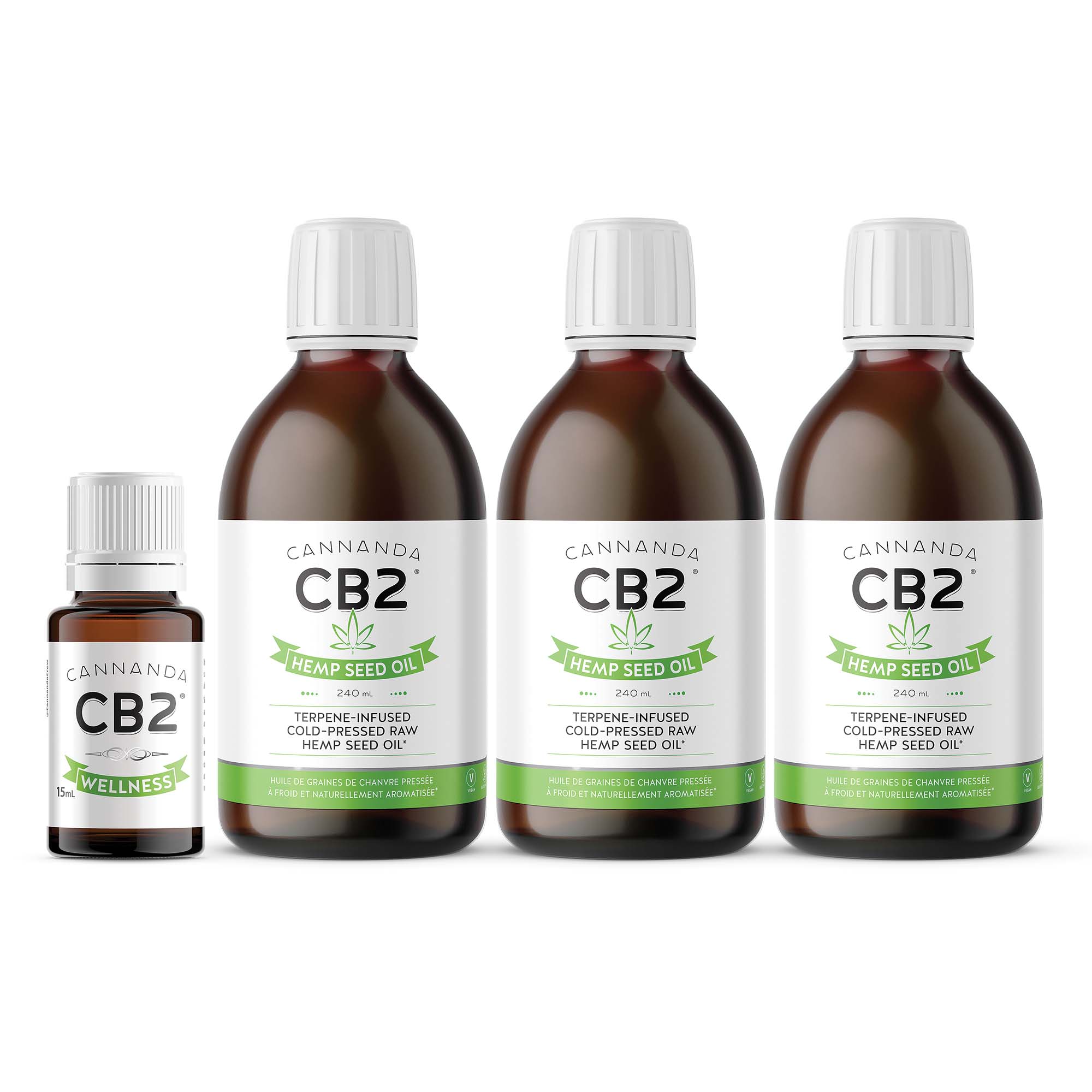
Cet article explique ce qui cause réellement la maladie d'Alzheimer au niveau cellulaire, pourquoi les traitements conventionnels ont une portée limitée, et ce que les preuves précliniques révèlent sur les multiples mécanismes de neuroprotection du BCP. Il présente également une connexion critique mais sous-estimée : le déficit cholinergique qui définit la MA, et comment l'alpha-pinène dans Cannanda High Achievers Focus y remédie par le même mécanisme que les médicaments contre l'Alzheimer les plus prescrits au monde.
Ce qui cause réellement la maladie d'Alzheimer
La plupart des gens associent la maladie d'Alzheimer à la perte de mémoire, le symptôme visible. La biologie sous-jacente est une cascade de changements pathologiques qui interagissent et s'amplifient mutuellement pendant des années ou des décennies avant l'apparition des symptômes :
Fragments de protéines anormaux qui s'accumulent entre les neurones, perturbant la communication synaptique et déclenchant une activation immunitaire. Présents des décennies avant l'apparition des symptômes.
Protéines tau hyperphosphorylées qui effondrent le système de transport interne des neurones, perturbant la fonction cellulaire et provoquant la mort neuronale.
Suractivation microgliale chronique libérant des cytokines inflammatoires qui endommagent les neurones sains comme dommages collatéraux, créant un cercle vicieux où l'inflammation provoque davantage de dommages, ce qui provoque davantage d'inflammation.
Dégénérescence précoce des neurones producteurs d'acétylcholine dans le télencéphale basal, causant directement les déficits de mémoire et d'attention qui caractérisent la MA précoce.
Défaillances de la production d'énergie dans les neurones, produisant un excès d'espèces réactives de l'oxygène (stress oxydatif) qui accélèrent la mort cellulaire et altèrent la signalisation neuronale.
La diminution des niveaux de BDNF et de protéines synaptiques érode les connexions entre les neurones, le substrat physique de la mémoire, de l'apprentissage et de la fonction cognitive.
Pourquoi les traitements conventionnels ont une portée si limitée
| Traitement | Ce qu'il fait | Ce qu'il manque |
|---|---|---|
| Donépézil / Aricept (inhibiteur de la cholinestérase) | Ralentit la dégradation de l'acétylcholine, améliore temporairement les symptômes | Ne ralentit pas la progression de la maladie ; seulement symptomatique ; ne traite pas les plaques, la neuroinflammation ou le tau |
| Mémantine (antagoniste NMDA) | Réduit l'excitotoxicité glutamatergique, bénéfice symptomatique modéré | Symptomatique uniquement ; ne modifie pas la pathologie sous-jacente |
| Lécanemab / Aducanumab (anticorps amyloïdes) | Réduit les plaques amyloïdes | Bénéfice cognitif modeste ; effets secondaires graves (saignements cérébraux) ; ne traite pas le tau, la neuroinflammation ou la perte cholinergique |
| AINS (tentés dans les essais de prévention) | Anti-inflammatoire | Échec dans les essais ; dommages gastro-intestinaux ; ne ciblent pas spécifiquement les voies de la neuroinflammation |
| Statines (tentées dans les essais de prévention) | Réduction du cholestérol | Aucun bénéfice démontré dans les essais cliniques sur la MA |
Le schéma est cohérent : les approches à cible unique traitent une voie tout en laissant les autres non traitées. La pathologie multi-voies de la MA signifie que les approches multi-cibles ont une justification théorique plus forte, c'est précisément pourquoi la combinaison du BCP d'activation du récepteur CB2, d'engagement du PPAR-gamma, de soutien du BDNF et d'inhibition de la MAGL mérite une attention sérieuse.
Les récepteurs CB2 et l'Alzheimer : un signal biologique unique
L'une des découvertes les plus révélatrices dans la recherche sur le système endocannabinoïde (SEC) et l'Alzheimer est que les récepteurs CB2 sont significativement régulés à la hausse dans les microglies et les macrophages à proximité des plaques bêta-amyloïdes dans le cerveau atteint de la MA, présents à une densité beaucoup plus élevée que dans les tissus cérébraux sains. Ce n'est pas une coïncidence. Cela suggère que le système endocannabinoïde tente activement de répondre à la pathologie amyloïde, déployant les récepteurs CB2 aux sites de dommages dans le but de réguler la réponse inflammatoire et de faciliter l'élimination des plaques. Le SEC essaie déjà de combattre la MA. Le BCP l'aide à faire son travail plus efficacement en fournissant l'agoniste CB2 que le système est prêt à recevoir.
Comment le BCP agit sur la pathologie d'Alzheimer : cinq mécanismes
Le mécanisme inflammatoire central
La neuroinflammation dans la maladie d'Alzheimer est principalement médiatisée par les microglies, les cellules immunitaires résidentes du cerveau. Dans le tissu cérébral sain, les microglies sont en état de surveillance, détectant les dommages et les agents pathogènes. Dans la MA, le dépôt chronique d'amyloïde et le stress oxydatif poussent les microglies dans un état inflammatoire persistant M1, où elles libèrent des cytokines pro-inflammatoires (TNF-α, IL-1β, IL-6, COX-2) qui endommagent les neurones sains comme dommages collatéraux, créant un cercle vicieux où l'inflammation entraîne plus de dommages, ce qui entraîne plus d'inflammation.
L'activation du récepteur CB2 modifie cet équilibre. Elle éloigne les microglies de l'état M1 (inflammatoire, dommageable) vers l'activité M2 (neuroprotectrice, nettoyante) :
- Libère TNF-α, IL-1β, IL-6
- Produit des espèces réactives de l'oxygène
- Endommage les neurones sains
- Aggrave l'accumulation d'amyloïde
- Libère l'IL-10 anti-inflammatoire
- Phagocytose le bêta-amyloïde
- Favorise la réparation tissulaire
- Soutient la survie neuronale
Le mécanisme d'élimination des plaques
Les plaques bêta-amyloïdes sont l'une des caractéristiques pathologiques définissant la MA et une cible des plus récentes approbations pharmaceutiques (lécanemab, aducanumab). Ces médicaments utilisent des anticorps pour éliminer l'amyloïde, à un coût significatif et avec des effets secondaires importants. Le BCP réalise l'élimination de l'amyloïde par la polarisation microgliale M2 décrite ci-dessus : les microglies à l'état M2 englobent physiquement et dégradent les dépôts amyloïdes par phagocytose améliorée.
Le fait que cet effet dans le modèle APP/PS1 ait nécessité à la fois l'activation de CB2 et l'engagement de PPAR-gamma souligne pourquoi le BCP est particulièrement pertinent : c'est l'un des rares composés naturels qui activent les deux voies simultanément.
Pourquoi le BDNF est essentiel dans la maladie d'Alzheimer
Le facteur neurotrophique dérivé du cerveau (BDNF) est la principale molécule de maintien neuronal du cerveau, favorisant la survie des neurones, la croissance synaptique et la plasticité sous-jacente à la formation de la mémoire. Les niveaux de BDNF sont significativement réduits chez les patients atteints d'Alzheimer par rapport aux contrôles appariés par l'âge, et des niveaux de BDNF plus faibles sont corrélés à un déclin cognitif plus rapide. Les connexions physiques entre les neurones (synapses) se dégradent à mesure que les niveaux de BDNF diminuent, et cette perte synaptique est le mécanisme le plus directement lié aux déficits de mémoire de la MA.
La synaptophysine et le NCAM sont des protéines structurelles trouvées au niveau des synapses ; leur restauration par le BCP indique une véritable récupération synaptique, et pas seulement une gestion des symptômes. C'est la base neurologique de l'amélioration de la mémoire observée dans les modèles animaux.
Pourquoi le PPAR-gamma est important dans la MA
Le PPAR-gamma (récepteur gamma activé par les proliférateurs de peroxysomes) est un récepteur nucléaire qui régule l'inflammation, le métabolisme et la survie cellulaire. Dans la recherche sur la maladie d'Alzheimer, l'activation du PPAR-gamma a trois effets pertinents : elle réduit la charge amyloïde indépendamment des voies CB2, elle protège les neurones du stress oxydatif (la composante de dysfonction mitochondriale de la MA), et elle améliore la phagocytose microgliale des dépôts amyloïdes par une voie distincte de l'élimination médiatisée par les CB2.
Le BCP active le PPAR-gamma en plus des récepteurs CB2, ce qui lui confère un mécanisme véritablement double que les agonistes CB2 à cible unique ne reproduisent pas. L'étude sur les souris APP/PS1 de Cheng en 2014 a démontré que le blocage du PPAR-gamma inversait partiellement les effets neuroprotecteurs du BCP, confirmant que les deux voies sont actives. Cela fait du BCP non seulement un agoniste CB2 mais un composé neuroprotecteur multi-cibles.
Un mécanisme nouvellement identifié, pertinent pour la MA
Une étude de 2024 publiée dans Molecular Pharmacology (Keck et al., Université du Colorado) a révélé que le BCP inhibe la monoacylglycérol lipase (MAGL), l'enzyme qui décompose le 2-arachidonoylglycérol (2-AG), l'un des principaux endocannabinoïdes du corps. En inhibant la MAGL, le BCP augmente les niveaux de 2-AG in vivo.
Pourquoi cela est important pour la maladie d'Alzheimer : le 2-AG active les récepteurs CB1 et CB2. Dans le cerveau atteint de la MA, une déficience en endocannabinoïdes (y compris une réduction du 2-AG) est documentée, et le soutien du tonus endogène du SEC par l'inhibition de la MAGL est étudié comme une cible thérapeutique indépendante pour la MA. Les inhibiteurs pharmaceutiques de la MAGL sont en début d'investigation pour la neurodégénérescence. Le BCP atteint cet effet grâce à un terpène alimentaire naturel ayant le statut GRAS (Generally Recognized As Safe). Cela ajoute un troisième mécanisme à l'activité du BCP pertinente pour le SEC : activation directe du CB2 + engagement du PPAR-gamma + inhibition de la MAGL augmentant le 2-AG.
Le déficit cholinergique et le lien avec l'alpha-pinène
Cinq des six caractéristiques pathologiques fondamentales de la maladie d'Alzheimer sont abordées par les mécanismes du BCP ci-dessus. La sixième, la perte de neurones cholinergiques, est traitée par un autre produit Cannanda, et le lien est remarquablement direct.
La carence en acétylcholine dans la maladie d'Alzheimer est si fondamentale à la condition que les trois médicaments les plus largement prescrits contre la MA, le donépézil (Aricept), la rivastigmine (Exelon) et la galantamine (Razadyne), agissent tous en inhibant l'acétylcholinestérase, l'enzyme qui dégrade l'acétylcholine. En ralentissant cette dégradation, ils maintiennent des niveaux plus élevés d'acétylcholine dans le cerveau, compensant temporairement la perte de neurones cholinergiques.
L'alpha-pinène, l'ingrédient actif de Cannanda High Achievers Focus, inhibe l'acétylcholinestérase par un mécanisme naturel. Cela a été documenté par Perry et al. en 2000, et l'effet inhibiteur de l'alpha-pinène (et des huiles essentielles à base de pin qui en contiennent) sur cette enzyme est bien établi dans la littérature. Le résultat physiologique est le même : plus d'acétylcholine préservée dans la fente synaptique, soutenant la mémoire et l'attention.
Combinés, l'huile CB2 (BCP) et High Achievers Focus (alpha-pinène) abordent cinq des six caractéristiques pathologiques de la maladie d'Alzheimer par des mécanismes complémentaires et non superposables :
- Neuroinflammation → BCP via polarisation CB2/M2
- Clairance du bêta-amyloïde → BCP via CB2 + PPAR-gamma
- Plasticité synaptique et BDNF → BCP via restauration CB2/BDNF
- Stress oxydatif et neuroprotection → BCP via PPAR-gamma
- Déficit cholinergique → Alpha-pinène via inhibition de l'acétylcholinestérase
Aucune autre gamme de produits d'entreprise de santé naturelle n'aborde cette étendue de la pathologie de la MA par des mécanismes examinés par des pairs dans une seule combinaison.
Soutenir la santé cérébrale : approches naturelles en complément du BCP
L'exercice est l'intervention la plus solidement étayée par des preuves pour l'élévation du BDNF, plus que tout supplément. L'exercice aérobique (150 min/semaine) a constamment montré sa capacité à augmenter le volume de l'hippocampe, à élever les niveaux de BDNF et à réduire le risque d'Alzheimer dans les études épidémiologiques. Il réduit également la neuroinflammation, améliore le flux sanguin cérébral et soutient le sommeil, tous pertinents pour la pathologie de la MA. Toute approche globale de la santé cérébrale doit inclure une activité physique régulière.
Le système glymphatique du cerveau, qui élimine les déchets métaboliques, y compris le bêta-amyloïde, fonctionne principalement pendant le sommeil. La privation chronique de sommeil altère considérablement la clairance de l'amyloïde, accélérant l'accumulation de plaques. Les personnes souffrant d'insomnie chronique ont une charge amyloïde mesurablement plus élevée. Les propriétés de soutien du sommeil du BCP par la modulation de l'ECS sont donc doublement pertinentes pour la MA : neuroprotectrices directes et soutenant la clairance glymphatique qui réduit l'accumulation d'amyloïde pendant la nuit.
Le DHA (acide docosahexaénoïque) est l'oméga-3 prédominant dans le tissu cérébral et est essentiel pour la fluidité des membranes neuronales, la synaptogenèse et la signalisation anti-neuroinflammatoire. La carence en DHA est documentée chez les patients atteints d'Alzheimer. Les études épidémiologiques associent constamment une consommation plus élevée de poisson à un risque réduit de MA, bien que les résultats des essais cliniques randomisés aient été mitigés dans le cas de la MA déjà établie. Le DHA est préférable comme approche préventive, à commencer tôt et à maintenir. Remarque : l'EPA et le DHA ne se trouvent pas dans les sources végétales ; des suppléments à base de poisson ou d'algues sont nécessaires.
La curcumine active le PPAR-gamma (la même voie que le BCP) et a des effets directs anti-amyloïdes et anti-neuroinflammatoires dans les modèles précliniques. La principale limitation est la biodisponibilité, la curcumine standard est mal absorbée, et des concentrations cérébrales significatives nécessitent des formulations améliorées (nanoparticulaires, complexe phospholipide ou co-administration de pipérine). Avec une amélioration appropriée de la biodisponibilité, la curcumine et le BCP ensemble procurent une activation complémentaire du PPAR-gamma et du CB2 à partir de composés indépendants.
Le régime MIND (Mediterranean-DASH Intervention for Neurodegenerative Delay) met l'accent sur les légumes verts à feuilles, les baies, les noix, l'huile d'olive, le poisson, et une consommation limitée de viande rouge et d'aliments transformés. Des études observationnelles montrent que les adeptes du régime MIND ont un risque significativement plus faible de maladie d'Alzheimer et un déclin cognitif plus lent. Le régime fournit des oméga-3, des polyphénols, de la vitamine E et des vitamines B pertinentes pour la santé cérébrale, dont beaucoup soutiennent les mêmes voies (neuroinflammation, stress oxydatif) que le BCP aborde par l'activation du CB2.
Un protocole pratique pour la santé cérébrale
L'huile de graines de chanvre CB2 prise avec les repas fournit du BCP quotidien de manière continue pour l'activation des récepteurs CB2, l'engagement du PPAR-gamma et l'inhibition de la MAGL. La dose recommandée par Cannanda est de 60-120 mg de BCP/jour. Le BCP est liposoluble, le prendre avec de la nourriture maximise l'absorption. Une utilisation quotidienne constante sur plusieurs semaines et mois permet d'obtenir des effets neuroprotecteurs durables.
High Achievers Focus fournit de l'alpha-pinène pour l'inhibition de l'acétylcholinestérase, préservant les niveaux d'acétylcholine et soutenant la mémoire et l'attention. Pour le soutien cognitif, une utilisation constante est plus précieuse qu'un dosage aigu. Peut être utilisé par voie sublinguale ou aromatique (quelques gouttes inhalées), ces deux voies délivrent efficacement l'alpha-pinène au cerveau.
Sept à neuf heures de sommeil de qualité soutiennent le cycle nocturne de clairance de l'amyloïde par le système glymphatique. Les propriétés du BCP favorisant le sommeil aident indirectement. Une hygiène du sommeil supplémentaire (heure de réveil constante, chambre sombre, température fraîche, pas d'écrans 90 minutes avant le coucher) élimine les obstacles comportementaux que le BCP seul ne peut résoudre.
150 minutes par semaine d'activité aérobique d'intensité modérée est la seule intervention de style de vie la plus solide pour l'élévation du BDNF et la réduction du risque de MA. Même 30 minutes de marche quotidienne soutiennent le volume de l'hippocampe au fil du temps. Pour les personnes souffrant déjà de déclin cognitif, l'exercice supervisé avec un accompagnement en physiothérapie vaut l'investissement.
Le DHA à base de poisson ou d'algues (500mg-1g/jour) contribue au composant membranaire cérébral du DHA. La curcumine avec une biodisponibilité améliorée (avec de la pipérine, ou dans une formulation phospholipidique) fournit une activation complémentaire du PPAR-gamma aux côtés du BCP. Ces trois éléments combinés abordent la neuroinflammation sous trois angles biochimiques indépendants.
Pour toute personne vivant avec la maladie d'Alzheimer ou un déclin cognitif significatif, les suppléments doivent compléter, et non remplacer, les soins médicaux. Le BCP et l'alpha-pinène n'ont pas d'interactions médicamenteuses connues avec les médicaments standards de la MA (donépézil, mémantine) aux doses recommandées, à une exception près : si la personne prend un médicament à fenêtre thérapeutique étroite, consultez son médecin avant d'ajouter l'un ou l'autre supplément. Toutes les décisions concernant les suppléments pour une personne sous un régime médicamenteux complexe doivent impliquer son médecin traitant.
Cinq voies de la MA. Deux produits. Une approche naturelle.
BCP pour la neuroinflammation, la clairance de l'amyloïde, le BDNF et le PPAR-gamma. Alpha-pinène pour l'inhibition de l'acétylcholinestérase. Non enivrant. Pas d'interactions médicamenteuses pour la plupart des gens. Ingrédients de statut GRAS.
Foire aux questions
Le BCP aide-t-il réellement à éliminer les plaques de bêta-amyloïde ?
Dans les études précliniques, oui. Le BCP signale aux microglies de passer d'un état inflammatoire M1 destructeur à un état phagocytaire M2, engloutissant et décomposant physiquement les dépôts de bêta-amyloïde. L'étude de Cheng et al. 2014 sur des souris APP/PS1 atteintes d'Alzheimer a montré que le BCP réduisait significativement la charge amyloïde dans les tissus hippocampiques et corticaux via l'activation de CB2 et de PPAR-gamma. Rathod 2025 a confirmé des effets similaires. Ce sont des résultats de modèles animaux ; les essais cliniques chez l'homme ne sont pas encore terminés.
Comment l'huile CB2 agit-elle exactement dans le cerveau atteint d'Alzheimer ?
Les récepteurs CB2 agissent comme un variateur pour la réponse inflammatoire du cerveau. Dans la MA, les microglies sont bloquées dans un état M1 hyperactif, libérant des cytokines qui endommagent les neurones sains. Il est crucial de noter que les récepteurs CB2 sont surexprimés près des plaques amyloïdes dans le cerveau atteint de MA, l'ECS réagit déjà. Le BCP active ces récepteurs, déplaçant les microglies vers une activité M2 neuroprotectrice, calmant l'inflammation tout en améliorant la clairance de l'amyloïde.
Qu'est-ce que la voie PPAR-gamma et pourquoi est-elle importante pour la maladie d'Alzheimer ?
Le PPAR-gamma est un récepteur nucléaire qui régule l'inflammation, le métabolisme et la neuroprotection. Dans la MA, l'activation du PPAR-gamma réduit la charge amyloïde, protège les neurones du stress oxydatif et améliore la phagocytose microgliale. Le BCP active le PPAR-gamma en plus du CB2, offrant un double mécanisme neuroprotecteur que les agonistes CB2 plus sélectifs ne répliquent pas. L'étude de Cheng 2014 sur les souris APP/PS1 a montré que le blocage du PPAR-gamma inversait partiellement les effets du BCP, confirmant que les deux voies sont actives.
Qu'est-ce que l'acétylcholine et pourquoi est-elle importante dans la maladie d'Alzheimer ?
L'acétylcholine est le neurotransmetteur le plus associé à la mémoire, à l'apprentissage et à l'attention. Dans la MA, les neurones cholinergiques qui la produisent sont parmi les premiers à dégénérer. Les médicaments les plus prescrits contre la MA, le donépézil (Aricept), la rivastigmine (Exelon) et la galantamine, inhibent tous l'acétylcholinestérase pour préserver l'acétylcholine. L'alpha-pinène contenu dans High Achievers Focus inhibe la même enzyme par un mécanisme naturel, offrant un soutien complémentaire aux effets anti-inflammatoires et de clairance amyloïde du BCP.
Qu'est-ce que le BDNF et pourquoi est-il important pour la maladie d'Alzheimer ?
Le BDNF est une protéine qui soutient la survie des neurones, la croissance synaptique et la plasticité sous-jacente à la formation de la mémoire. Les niveaux de BDNF sont significativement réduits dans la MA, et un BDNF plus faible est corrélé à un déclin cognitif plus rapide. Le BCP augmente l'expression du BDNF dans les neurones hippocampiques, restaure les protéines synaptiques (synaptophysine, NCAM, CNTF) et améliore l'apprentissage spatial et la mémoire dans les modèles de MA (Rathod, 2025).
Le BCP est-il meilleur que les autres cannabinoïdes pour la santé cérébrale dans la maladie d'Alzheimer ?
Pour la maladie d'Alzheimer, le BCP présente un avantage significatif en termes de sélectivité. Il cible les récepteurs CB2 sans activer les CB1. L'activation des CB1 (comme celle du THC) peut provoquer confusion, désorientation et intoxication, ce qui est profondément problématique pour une personne souffrant de troubles cognitifs. Le BCP offre des bienfaits neuroprotecteurs et anti-neuroinflammatoires sans aucun effet médié par les CB1, ce qui le rend beaucoup plus sûr pour les personnes atteintes ou à risque de démence.
Existe-t-il des preuves d'essais cliniques chez l'homme pour le BCP dans la maladie d'Alzheimer ?
À ce jour, les preuves sont précliniques, provenant principalement d'études sur cultures cellulaires et animales. Aucun essai clinique randomisé chez l'homme concernant spécifiquement le BCP dans la maladie d'Alzheimer n'a été publié. Les preuves précliniques sont substantielles et mécaniquement cohérentes, mais cette distinction est importante : les modèles animaux ne prédisent pas toujours les résultats chez l'homme. Le profil de sécurité du BCP, son statut GRAS et son profil d'interaction médicamenteuse généralement propre en font un complément raisonnable aux soins standard en attendant les données des essais chez l'homme.
Quelles sont les approches naturelles les plus documentées pour soutenir la santé cérébrale contre le risque d'Alzheimer ?
Les approches dont l'efficacité est étayée par des preuves significatives comprennent : l'exercice aérobique (les preuves les plus solides concernant l'élévation du BDNF et la réduction du risque de maladie d'Alzheimer) ; un sommeil de qualité (essentiel pour la clairance amyloïde gliale) ; l'huile BCP/CB2 (neuro-inflammation, clairance amyloïde, BDNF, PPAR-gamma) ; l'alpha-pinène via High Achievers Focus (inhibition de l'acétylcholinestérase) ; les oméga-3 DHA (santé des membranes cérébrales) ; la curcumine à biodisponibilité améliorée (PPAR-gamma, anti-amyloïde) ; et le régime MIND. Celles-ci agissent par différents mécanismes non superposés et sont plus efficaces en combinaison.
Références
- Aso, E., & Ferrer, I. (2016). CB2 cannabinoid receptor as potential target against Alzheimer's disease. Frontiers in Neuroscience, 10, 243. https://doi.org/10.3389/fnins.2016.00243
- Rathod, S. S. (2025). β-Caryophyllene ameliorates STZ-induced Alzheimer's disease-like conditions in rats via modulation of brain-derived neurotrophic factor, synaptic plasticity, and neuroinflammation. European Journal of Neuroscience, 62(10), e70317. https://doi.org/10.1111/ejn.70317
- Cheng, Y., Dong, Z., & Liu, S. (2014). β-Caryophyllene ameliorates the Alzheimer-like phenotype in APP/PS1 mice through CB2 receptor activation and the PPARγ pathway. Pharmacology, 94(1-2), 1-12. https://doi.org/10.1159/000362689
- Magham, S. V., et al. (2021). Cannabinoid receptor 2 selective agonists and Alzheimer's disease: An insight into the therapeutic potentials. Journal of Neuroscience Research, 99(11), 2888-2905. https://doi.org/10.1002/jnr.24933
- Askari, V. R., & Shafiee-Nick, R. (2019). The protective effects of β-caryophyllene on LPS-induced primary microglia M1/M2 imbalance: A mechanistic evaluation. Life Sciences, 219, 40-73. https://doi.org/10.1016/j.lfs.2018.12.059
- Keck, J., et al. (Todorovic lab, University of Colorado). (2024). β-Caryophyllene inhibits monoacylglycerol lipase activity and increases 2-arachidonoyl glycerol levels in vivo. Molecular Pharmacology, 105(2), 75. https://doi.org/10.1124/molpharm.123.000668
- Perry, N. S., et al. (2000). In-vitro inhibition of human erythrocyte acetylcholinesterase by salvia lavandulaefolia essential oil and constituent terpenes. Journal of Pharmacy and Pharmacology, 52(7), 895-902. (Alpha-pinene acetylcholinesterase inhibition.)
- Gertsch, J., et al. (2008). Beta-caryophyllene is a dietary cannabinoid. PNAS, 105(26), 9099-9104. https://doi.org/10.1073/pnas.0803601105