CB2 Topical Oil for Joint and Muscle Pain: How It Works and When to Use It
TL;DR
CB2 Topical Oil is a fast-absorbing, non-intoxicating oil built around beta-caryophyllene (BCP), the only known dietary compound that directly activates CB2 receptors.
Unlike a menthol rub that just distracts the nerve, or an NSAID gel that comes with warnings, BCP works locally on inflammation right where you apply it.
It is best for targeted, one-spot pain. If you are dealing with pain in more than one area, pairing it with an oral CB2 product covers more ground.
The problem with sore, specific spots
Some pain is easy to treat because it is everywhere, so you take something and it helps everywhere. But a lot of pain is not like that. It is one knee. One shoulder. The lower back after a long day. That kind of pain is annoying because your options do not really match the problem.
A pill works on your whole system to help one small area. A basic rub gives you a cooling sensation for twenty minutes and then you are right back where you started. Neither one is actually built for "it hurts right here."
Why the usual topical options fall short
Menthol and ice-based gels
These distract the nerve with a cooling sensation for a few minutes. The underlying inflammation is untouched, so the ache comes right back once the cooling fades.
Diclofenac and similar
These do work on inflammation, but carry warnings around broken skin, long-term use, and interactions with certain medications, making daily use a harder call.
The gap between those two is real: something that works on inflammation, locally, without those tradeoffs.
How CB2 Topical Oil actually works
CB2 Topical Oil is built around beta-caryophyllene, a naturally occurring dietary terpene found in plants like black pepper and clove. BCP is the only known dietary compound that directly activates CB2 receptors, part of your body's endocannabinoid system. When applied to the skin, BCP reaches CB2 receptors in that local area and helps calm inflammation right where it is applied, rather than working through your entire system the way a pill does.
It is non-intoxicating. BCP does not act on CB1 receptors, which is the part of the endocannabinoid system tied to psychoactive effects, so there is no "high" involved at any point.
The landmark study that first identified beta-caryophyllene as a natural, selective activator of the CB2 receptor, establishing it as a "dietary cannabinoid."
Found that BCP reduced inflammatory pain responses in animal models through direct CB2 receptor activation.
Locally applied BCP reduced inflammation markers and pain sensitivity in a diabetic neuropathy model, mediated specifically through CB2 receptor activation.
Topical, oral, or both: how to choose
This is the part a product label cannot really answer for you, because it depends on where your pain shows up.
Topical only
Best for one specific sore spot. Fast, local relief, good starting point if you are new to CB2 products.
Oral only
CB2 Wellness or Hemp Seed Oil. Best for pain in more than one area, or calming support beyond the sore spot.
Both together
Best for a bad flare-up. Targeted relief right where it hurts, plus whole-body support in the background.
How to use it
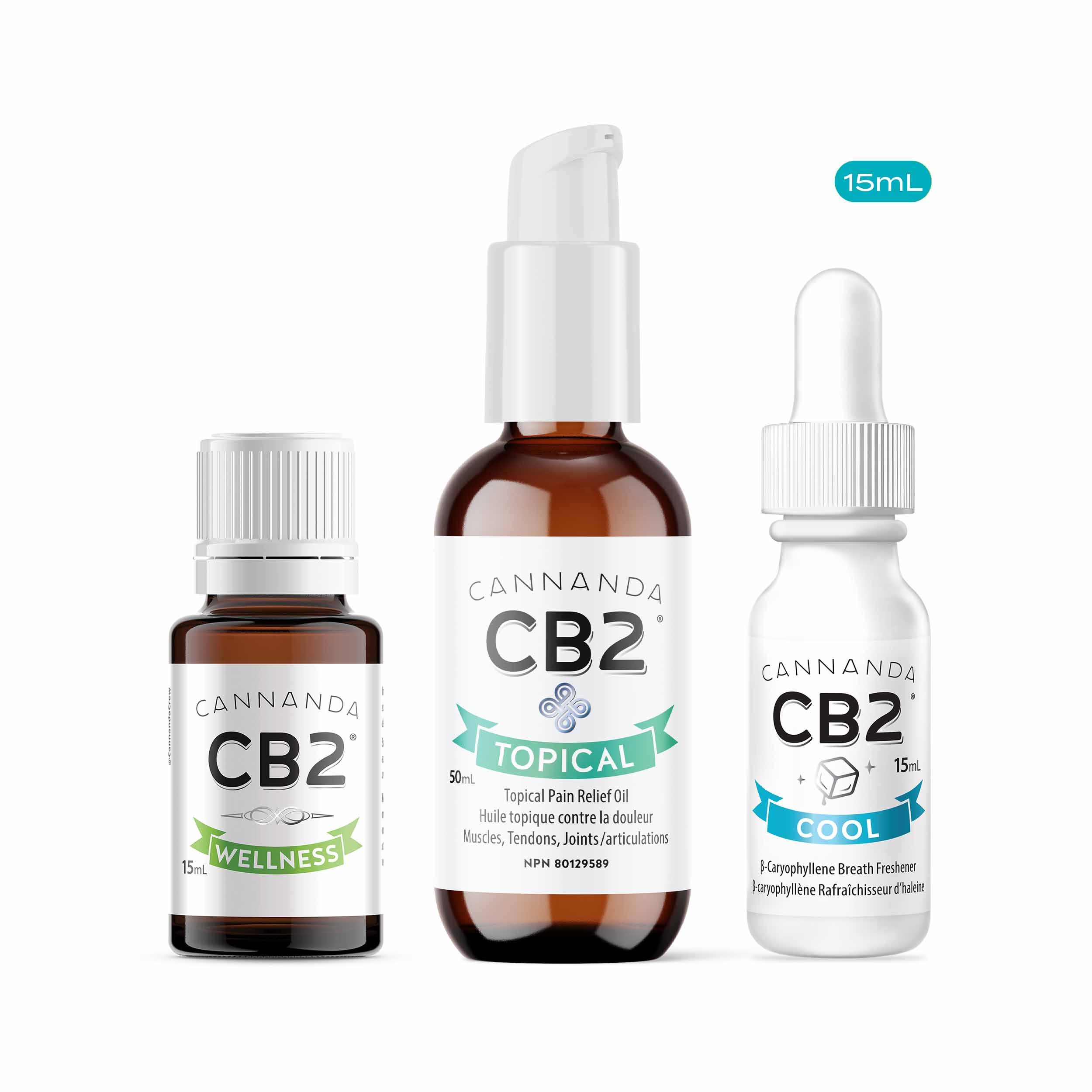
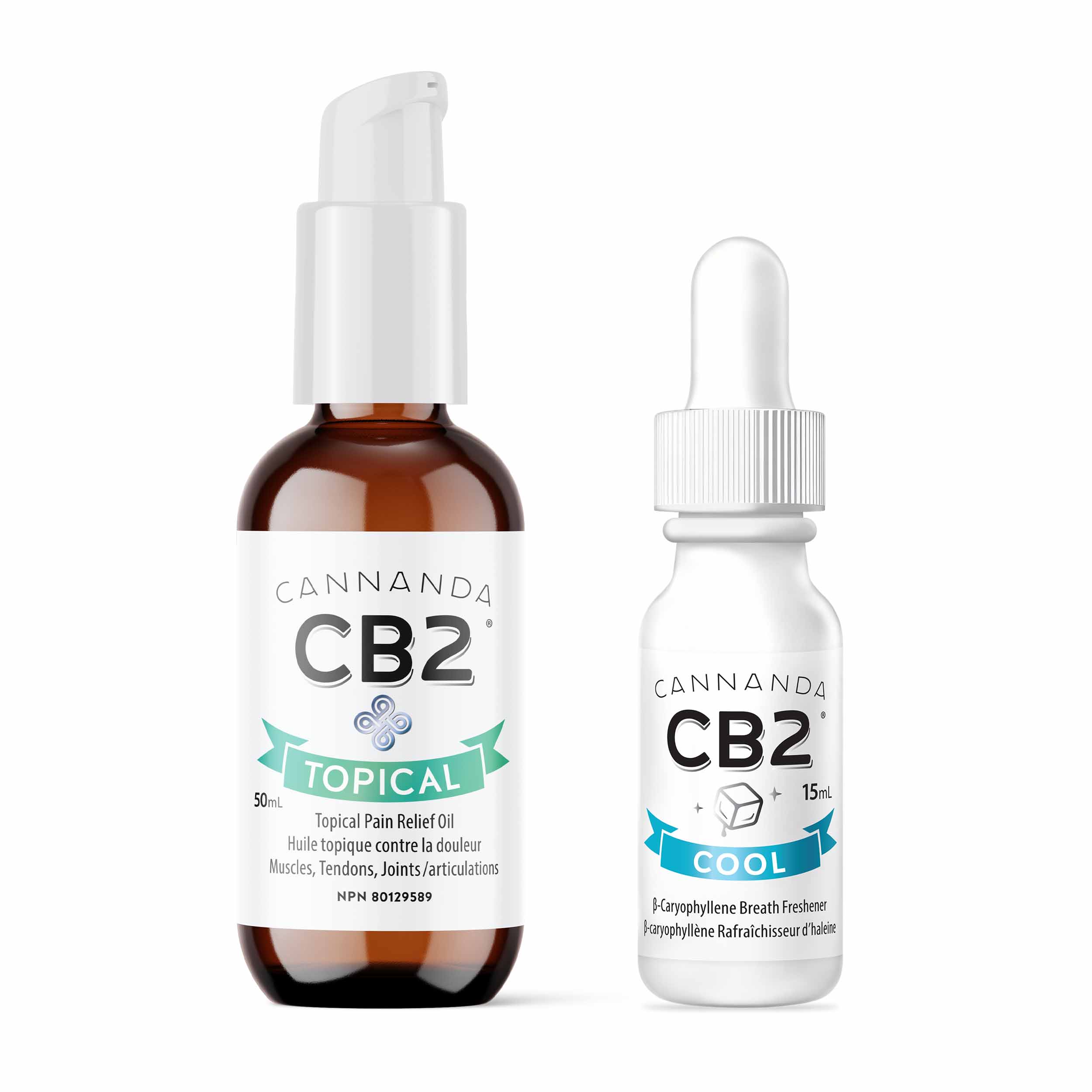
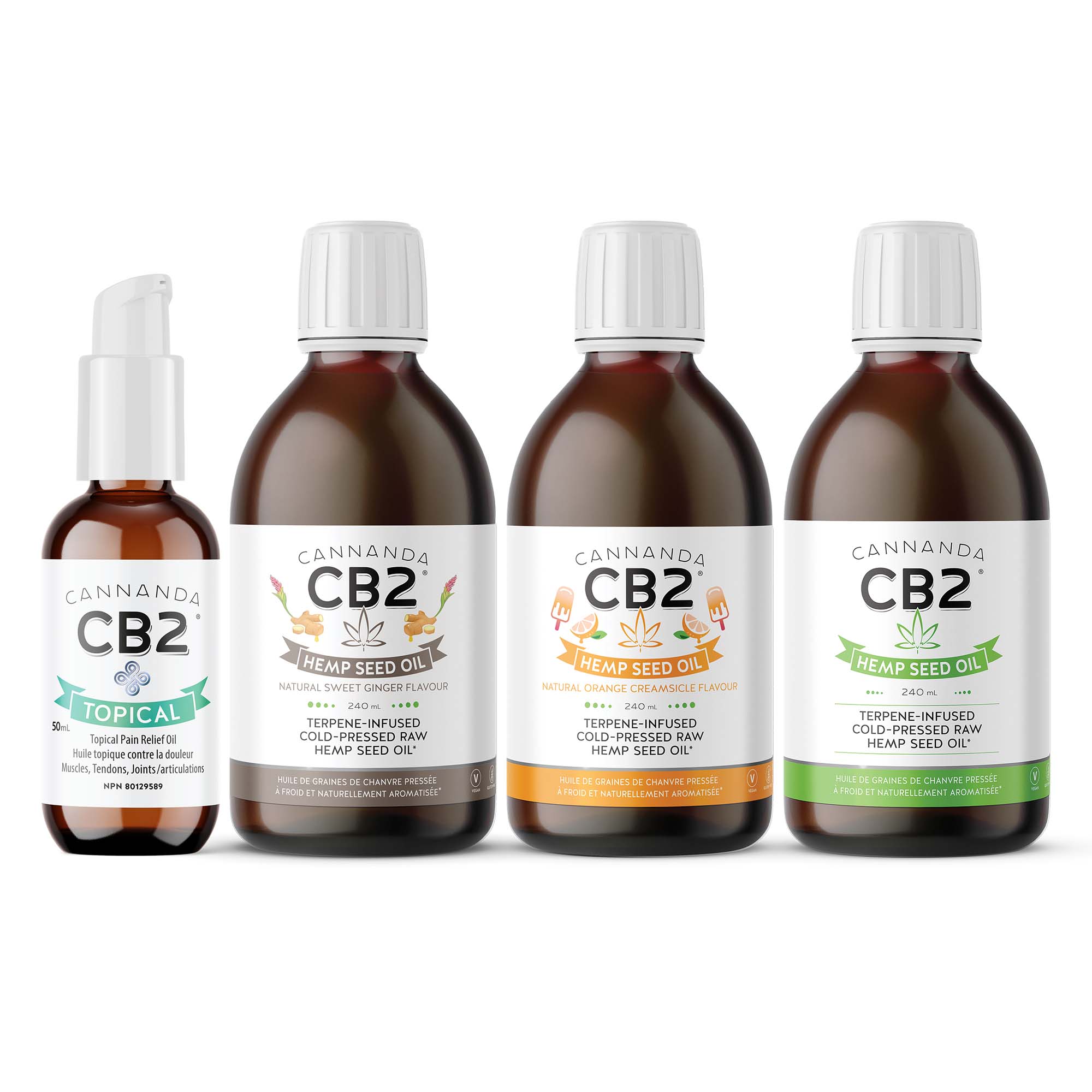
CB2 Topical Oil is a pump-applied, non-greasy liquid. Most people apply it directly to the sore area and gently rub it in. It absorbs quickly, so it will not sit on the skin or leave a strong scent behind. For full instructions and exact application guidance, check the product page.
CB2 Topical Oil
Fast-absorbing, non-intoxicating relief for joints and muscles, applied right where you need it.
Shop CB2 Topical OilBacked by our money-back guarantee. Limitations apply, see our refund policy for full details.
Frequently asked questions
- Is CB2 Topical Oil the same as the discontinued CB2 Salve?
- CB2 Topical Oil is our current topical product and the direct successor to the original Salve, which is no longer sold. It is a meaningful upgrade, not just a reformat. It carries 2.8 times more BCP by concentration, and it comes in a pump bottle instead of the tins the Salve used. The pump keeps the product sealed off from air and fingers between uses, which solves a contamination issue the open tins had, and it also gives the oil a much longer stability and shelf life.
- How is this different from a menthol pain rub?
- Menthol creates a cooling sensation that distracts the nerve for a few minutes. CB2 Topical Oil works on inflammation itself by activating CB2 receptors in the applied area.
- How is this different from an NSAID gel like diclofenac?
- NSAID gels also work on inflammation, but come with warnings around broken skin and long-term daily use. CB2 Topical Oil is a natural, non-intoxicating alternative without those same warnings.
- Can I use this together with CB2 Wellness drops?
- Yes. Many people use CB2 Topical Oil for a specific sore spot alongside CB2 Wellness drops for broader, whole-body support.
- How fast should I expect to feel something?
- This varies by person. Some people notice a difference within minutes of applying it, others find it builds with consistent use.
- Is this safe to use every day?
- Yes, it is formulated for regular use. A patch test is recommended first to check for skin sensitivity. Health Canada requires the label note to consult a healthcare practitioner for use beyond 7 days. This is not a sign that the product becomes unsafe after a week. It is a standard precaution so that if your pain is actually something more serious, a doctor gets a chance to take a look rather than the pain being managed indefinitely on your own.
- Can I use it on broken or irritated skin?
- No, it is meant for intact, healthy skin. Avoid applying to open wounds or irritated areas.
- Does it smell strong or feel greasy?
- It is a fast-absorbing, non-greasy oil with a light minty scent from natural peppermint oil, not a heavy medicinal smell.
- Is it safe for sensitive skin?
- Most people tolerate it well, but a patch test is recommended before your first full application, especially if you have sensitive skin.
- Gertsch J, Leonti M, Raduner S, et al. Beta-caryophyllene is a dietary cannabinoid. Proceedings of the National Academy of Sciences, 2008;105(26):9099-9104.
- Klauke AL, Racz I, Pradier B, et al. The cannabinoid CB2 receptor-selective phytocannabinoid beta-caryophyllene exerts analgesic effects in mouse models of inflammatory and neuropathic pain. European Neuropsychopharmacology, 2014;24(4):608-620.
- Intraplantar beta-caryophyllene alleviates pain and inflammation in STZ-induced diabetic peripheral neuropathy via CB2 receptor activation. Peer-reviewed, PMC.