BCP and CB2 Oil for GLP-1 Users: Ozempic, Wegovy, and Mounjaro Support
A plain-language look at how beta-caryophyllene (BCP) and CB2 oil work alongside GLP-1 drugs like Ozempic, Wegovy, Mounjaro, and Zepbound, and where the science actually stands.
Who this is for
You're on Ozempic, Wegovy, Mounjaro, Zepbound, or a similar GLP-1 drug. Things are going well on the scale, but your joints ache more on long walks, your energy dips, or you're just looking for extra support while your body adjusts. This one is for you.
The short version
- GLP-1 drugs work through the GLP-1 receptor. BCP works through a completely different set of receptors: CB2, PPAR-alpha, and PPAR-gamma.
- A pharmaceutical patent (US 7,202,213) describes pairing a GLP-1 drug with a separate synthetic compound that activates PPAR-alpha and PPAR-gamma at the same time, on the idea that the two pathways work well as a team. BCP activates that exact same PPAR-alpha and PPAR-gamma pathway that is described in the patent, but entirely naturally.
- These pathways don't compete with GLP-1. They run side by side in your body. The mechanisms are distinct, non-overlapping, and already recognized in pharmaceutical research as complementary to GLP-1.
- Many Cannanda CB2® customers use our products for everyday joint comfort, calm, and general wellness support while they're on a GLP-1 journey, not to change how the drug works.
What's actually going on when you're on Ozempic, Wegovy, or Mounjaro
GLP-1 medications like Ozempic, Wegovy, Mounjaro, and Zepbound work by copying a hormone your gut already makes. That hormone slows down digestion, tells your brain you're full sooner, and helps manage blood sugar. It's a smart, well-studied mechanism, and it's why these drugs have changed so many lives.
But losing weight quickly, and eating less overall, can bring some side effects along for the ride. Many people notice sore joints as their body adjusts to a new weight and activity level. Some notice their energy isn't quite where they want it. Others just want to support their body through a big change without adding another prescription.
This is where people start asking: is there something natural I can add, that won't fight with my medication, and might help me feel steadier day to day?
Meet BCP: the CB2 pathway that works differently than GLP-1
Beta-caryophyllene, or BCP, is a natural compound found in black pepper, cloves, copaiba, and hemp. It's the active ingredient behind our CB2 product line. BCP doesn't touch the GLP-1 receptor at all. Instead, it works through three separate receptors:
CB2 Receptors
Part of your endocannabinoid system. BCP is the only known dietary compound that activates CB2 directly. These receptors sit mostly in your immune cells and support your body's natural comfort and balance response.
PPAR-alpha
A receptor your liver and fat cells use to manage how fat is broken down and used for energy (think of it as a switch that tells your body "burn this fat now"). BCP activates this one directly too.
PPAR-gamma
A receptor involved in how your body handles blood sugar and stores fat (it helps your cells listen better to insulin, the hormone that moves sugar out of your blood). BCP appears to switch this one on indirectly, as a downstream effect of CB2 activation.
None of these three receptors are the GLP-1 receptor. They sit in a different part of your body's signaling system entirely.
Why we're telling you about a patent
Here's something exciting about BCP. A pharmaceutical patent (US 7,202,213) lays out a combination therapy: a GLP-1 derivative paired with a separate synthetic drug built to activate both PPAR-alpha and PPAR-gamma at the same time. The patent says this pairing was designed for metabolic syndrome (a cluster of issues like extra belly fat, high blood pressure, and blood sugar that runs a little high, all happening together) and related problems like insulin resistance (when your body has to work harder than it should to keep blood sugar normal) and dyslipidemia (fat levels in your blood, like cholesterol and triglycerides, that are out of a healthy range). The patent treats GLP-1 and the PPAR-alpha/PPAR-gamma activator as teammates, not competitors, each covering a different part of the same problem.
The synthetic compound named in that patent was never brought to market, but BCP activates that same PPAR-alpha receptor directly, and switches on PPAR-gamma as a downstream effect of CB2 activation. Cannanda CB2® are the world's best-selling BCP supplements that can already buy today, in a plant-derived form, without a prescription.
This isn't a stretch either. In separate animal studies, researchers gave BCP to rats on a high-fat, high-fructose diet, the kind of diet that leads to the same insulin resistance and dyslipidemia the patent talks about. The studies found BCP, working through CB2 and PPAR-gamma together, supported healthier fat levels in the blood and a steadier response to insulin in those animals. In other words, nature already made a compound that works the pathway the pharmaceutical industry patented a synthetic version of.
To be fair and clear: this is what the patent and the animal studies describe, not a claim about what our CB2 products do in a person. BCP hasn't been tested in combination with GLP-1 drugs in a clinical trial, and nothing here means BCP treats metabolic syndrome, insulin resistance, or dyslipidemia, or replaces anything your doctor prescribes. What we can say, backed by the research, is that BCP works on the same complementary pathway the patent was designed around, and that pathway is one your GLP-1 medication doesn't touch.
Where CB2 oil and BCP fit into a GLP-1 routine
Since you're already managing your metabolic health with a GLP-1 drug, the downstream effects of BCP's PPAR-alpha and PPAR-gamma activity are probably the most relevant part of the picture for you. Here's what the research on those two receptors points to.
Fat metabolism support
PPAR-alpha is your body's main switch for breaking down and using fat for energy, mostly in the liver. In a study on rats with dyslipidemia (fat levels in the blood, like cholesterol and triglycerides, that were higher than healthy), BCP activated PPAR-alpha directly and the animals' fat levels improved. CB2 Wellness supports healthy fat metabolism as part of your everyday routine.
Healthy blood sugar handling
PPAR-gamma plays a role in how well your cells respond to insulin. In a study on rats with diet-induced insulin resistance (where the body has to work harder than normal to keep blood sugar steady), BCP's activation of PPAR-gamma, through CB2, was linked to a better insulin response. CB2 Wellness supports blood sugar already within a normal, healthy range.
Vascular wellness support
The same CB2 and PPAR-gamma teamwork was tested in rats with diet-induced vascular inflammation (swelling and irritation inside the blood vessels caused by a poor diet). BCP was linked to healthier blood vessel function in that study. CB2 Wellness supports normal, healthy blood vessels as part of everyday wellness.
Alongside that, plenty of people on GLP-1 medications also lean on Cannanda CB2® for the more everyday stuff: joint and muscle comfort as their activity level changes, and a steady, calm baseline day to day.
Everyday joint comfort
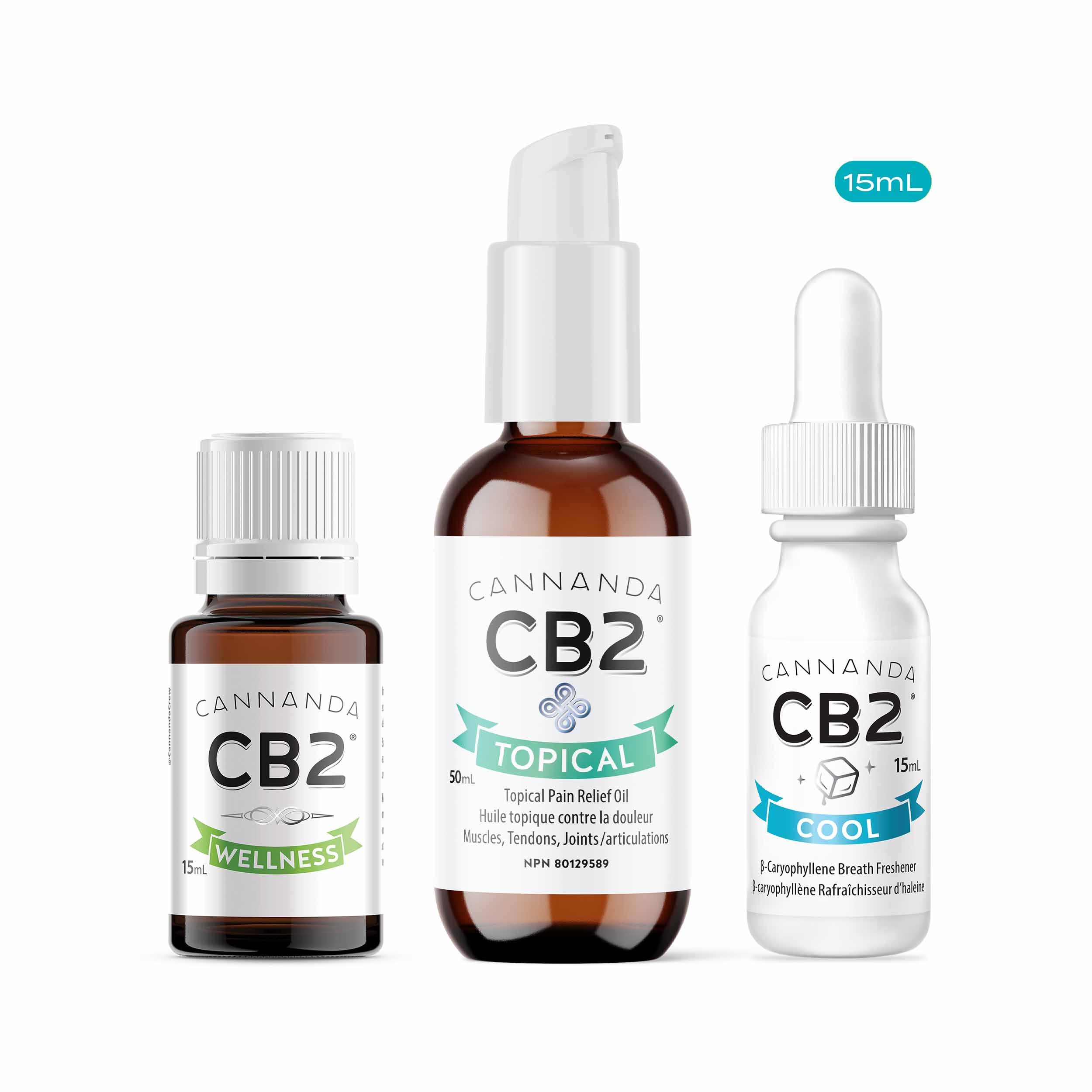
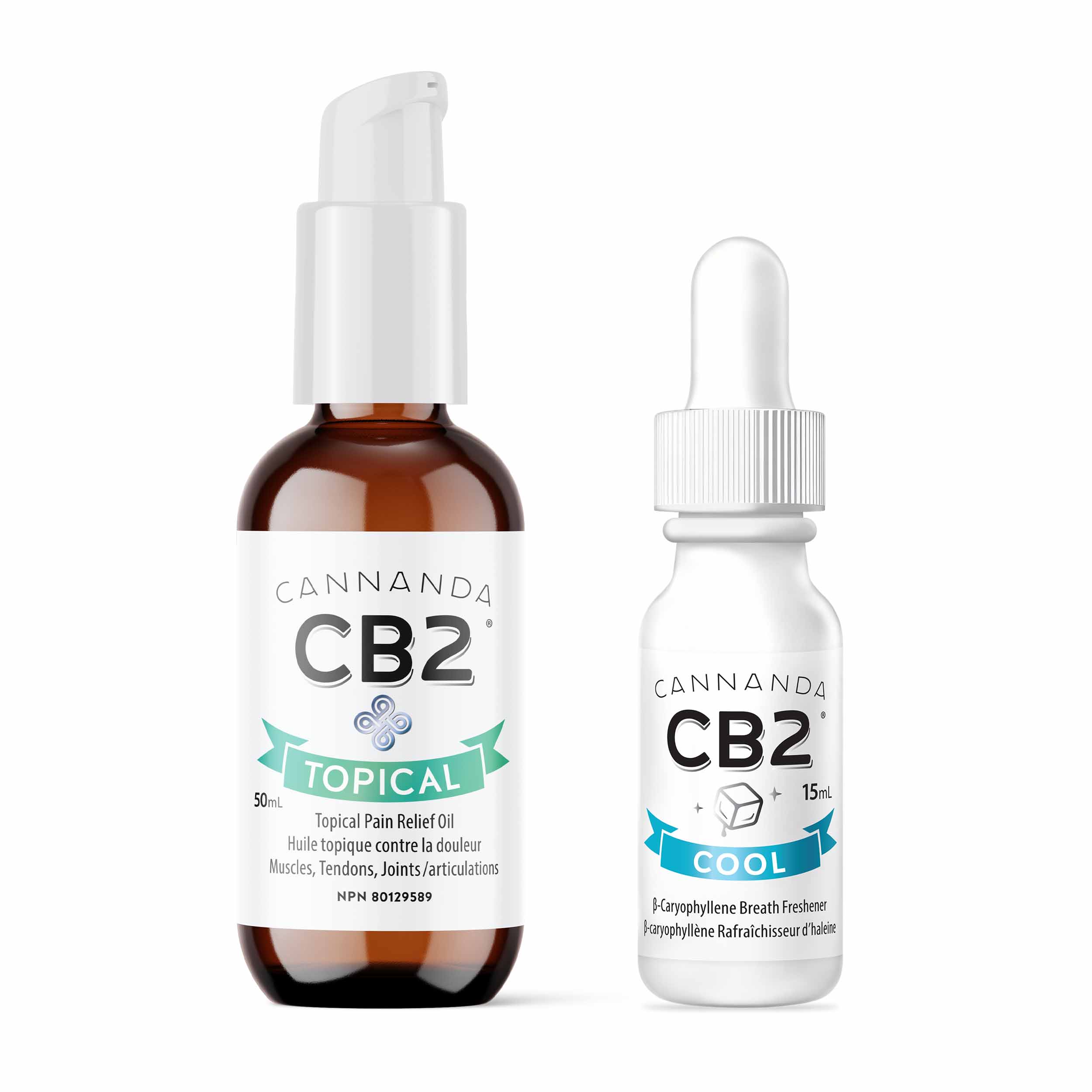
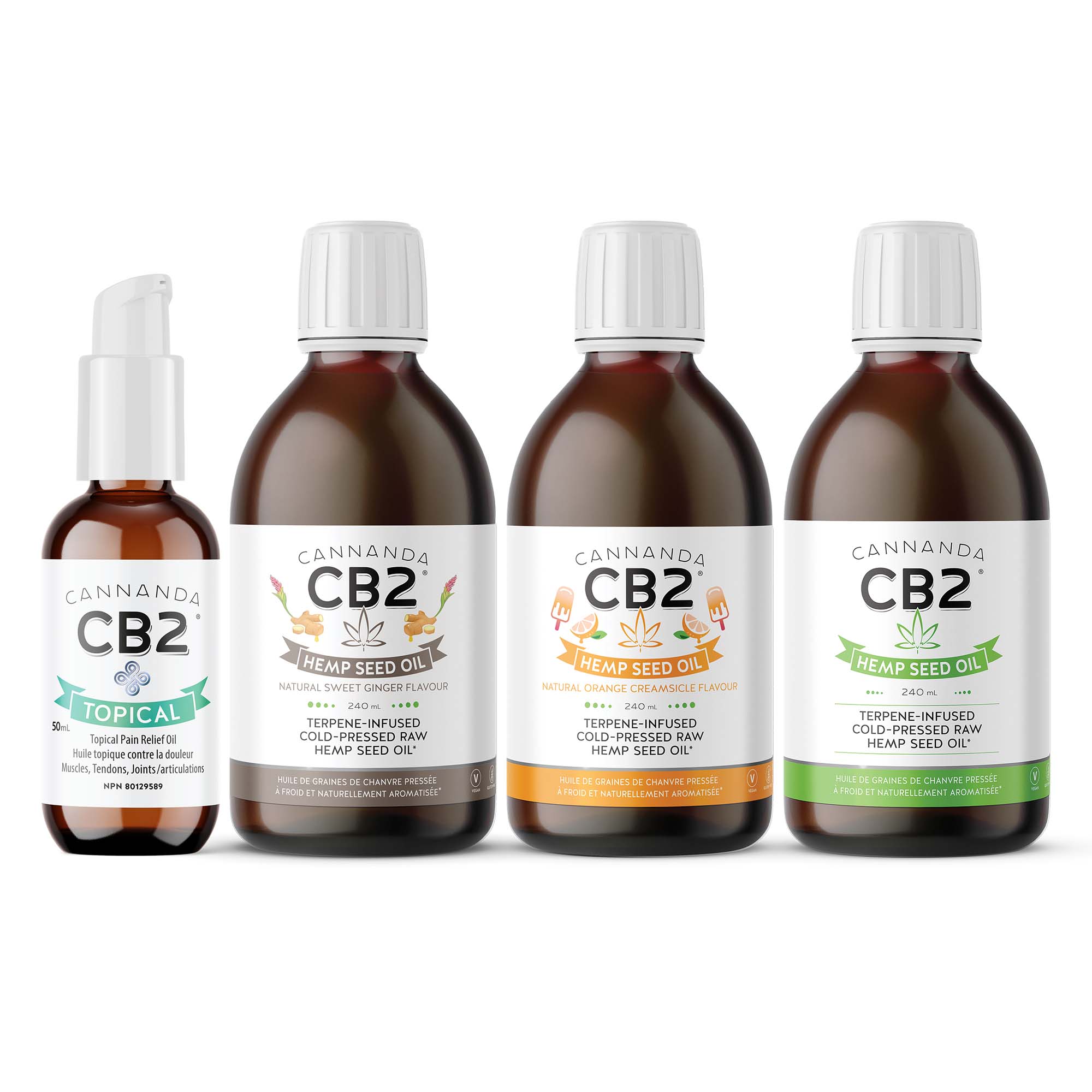
CB2 Topical Oil is a food-grade formula people apply directly where they feel it, for everyday joint and muscle comfort support.
Calm and steadiness
CB2 Wellness supports your body's natural stress response and everyday sense of balance, without any sedating or intoxicating effect.
A quick but important point: those three animal studies above were done in rats, not people, and they were looking at BCP on its own, not BCP together with a GLP-1 drug. Nothing here is a claim that our products treat dyslipidemia, insulin resistance, or vascular inflammation, or any other condition, in a person. Think of this as a promising, complementary pathway backed by real research, not a proven human outcome.
How to add BCP and CB2 oil to your GLP-1 routine
Make sure you're getting real CB2 oil
Cannanda CB2® is a registered trademark, and Cannanda was the first to bring BCP-based CB2 oil to market. Since then, copycats have shown up putting "CB2" on the label of products that have little to no actual beta-caryophyllene in them, or that skip the food-grade, Health Canada-licensed standards we hold ourselves to. A cheap oil with a similar name won't give you the receptor activity this article is talking about. If it doesn't say Cannanda CB2® or link back to cannanda.com, or one of our authorized retail partners, it isn't the real thing.
A note on safety
There's no known adverse interaction between BCP and GLP-1 medications on record. That said, there's also no dedicated study looking at the two together, so we can't say the combination has been formally tested. If you're on any medication with a narrow therapeutic window, or you have questions about how any supplement might interact with your specific prescription, check with your doctor or pharmacist before starting. This is good practice with any supplement, not just ours.
Explore the CB2 line
Over 95% of our raw materials are Canadian sourced, and every CB2 product is 0% THC and 0% CBD, made with food-grade ingredients you'd recognize.
Shop CB2 WellnessFrequently asked questions
- Does BCP increase GLP-1 levels in the body?
- No. There's no research showing BCP or CB2 activation raises the body's own GLP-1 levels. The pathways don't overlap that way.
- Will CB2 products interfere with my GLP-1 medication?
- There's no known interaction on record, but there's also no dedicated study on this exact combination. Ask your doctor or pharmacist before adding any supplement.
- Can BCP replace my GLP-1 prescription?
- No. BCP works through completely different receptors and isn't a substitute for prescribed medication. It's an everyday wellness addition, not a replacement.
- What is BCP exactly?
- Beta-caryophyllene is a natural compound found in black pepper, cloves, copaiba, and hemp. It's approved by the FDA as a food additive and is the main active ingredient in our CB2 line.
- Is BCP the same as CBD?
- No. BCP and CBD come from different parts of the plant and work on different receptors. Our CB2 products contain 0% CBD and 0% THC.
- Will CB2 products make me feel high?
- No. BCP is non-intoxicating. It doesn't produce any kind of high or impairment.
- What's the difference between PPAR-alpha, PPAR-gamma, and the GLP-1 receptor?
- They're three separate receptor systems in the body. GLP-1 drugs work on the GLP-1 receptor. BCP works on CB2, PPAR-alpha, and PPAR-gamma. None of these overlap directly.
- What do metabolic syndrome, insulin resistance, and dyslipidemia actually mean?
- Metabolic syndrome is a group of issues (extra belly fat, higher blood pressure, blood sugar running a little high) that tend to show up together. Insulin resistance means your body has to work harder than it should to keep blood sugar steady. Dyslipidemia means fat levels in your blood, like cholesterol and triglycerides, are outside a healthy range. These are the conditions the patent and the animal studies focused on, not conditions we're claiming our products treat.
- Which CB2 product should I start with?
- Most people on a GLP-1 medication start with CB2 Wellness for general support or CB2 Topical Oil if they want targeted comfort for joints and muscles.
- Are Cannanda products tested for people on other medications?
- Our products aren't tested in combination with any specific prescription drug, including GLP-1 medications. Always check with your doctor first.
- How do I know I'm buying real CB2 oil?
- Look for the Cannanda name and buy directly from cannanda.com, Amazon Canada, or one of our listed retail partners. Cannanda CB2® is a registered trademark, and copycat products using the name don't always contain meaningful amounts of BCP.
- Gertsch J, et al. Beta-caryophyllene is a dietary cannabinoid. PNAS. 2008. https://doi.org/10.1073/pnas.0803601105
- Irrera N, et al. Beta-caryophyllene mitigates collagen antibody induced arthritis in mice through a cross-talk between CB2 and PPAR-gamma receptors. Life Sci. 2019. https://doi.org/10.1016/j.lfs.2019.116915
- Youssef DA, et al. Beta-caryophyllene protects against diet-induced dyslipidemia and vascular inflammation in rats: involvement of CB2 and PPAR-gamma receptors. Biochem Pharmacol. 2018.
- Wu C, et al. Trans-caryophyllene is a natural agonistic ligand for peroxisome proliferator-activated receptor-alpha. Bioorg Med Chem Lett. 2014.
- Youssef DA, et al. Beta-caryophyllene alleviates diet-induced neurobehavioral changes in rats: the role of CB2 and PPAR-gamma receptors. 2019.
- Aoun J, et al. PPAR-delta activation induces enteroendocrine L cell GLP-1 production. Gastroenterology. 2011.
- US Patent 7,202,213. Combination therapy using a dual PPAR-alpha/PPAR-gamma activator and a GLP-1 derivative for the treatment of metabolic syndrome and related diseases and disorders.