How BCP Gets Through Your Skin: The Real Science Behind Topical Relief
Why a tiny natural molecule can do what most topical ingredients never manage, and why that same door swings both ways.
You rub an oil into a sore knee or a stiff shoulder and you wonder, does this stuff actually go anywhere, or is it just sitting on top of my skin doing nothing? It's a fair question. Most people think of skin as a sealed layer, something that keeps everything either fully out or fully in. That's not quite right.
Beta-caryophyllene, or BCP, gets through your skin because your skin isn't the solid barrier most people picture. Here's how that works, and why it also changes what should and shouldn't end up in your topical products.
Your Skin Is a Porous Wall, Not a Solid One
Picture a brick wall, but one with tiny gaps in the mortar you can't see with your eyes. The bricks are your skin cells. The mortar holding them together is a layer of fat. That outer layer is called the stratum corneum, and it's only about as thick as a sheet of paper. It slows things down and screens most things out, but it was never built to be sealed shut. It's porous by design, letting the right kind of molecule pass through.
The 500 Dalton Rule
Skin scientists use a simple cutoff to guess whether a molecule can get through skin: it needs to weigh less than 500 Daltons. Anything heavier is usually too big to fit through those gaps. Size also isn't the whole story. The molecule needs to get along with fat too, since that's what the mortar between skin cells is made of.
How Small Is BCP, Really?
BCP weighs in at 204.35 Daltons. That puts it well under the 500 Dalton ceiling, with plenty of room to spare. BCP is a sesquiterpene, a natural plant compound found in black pepper, cloves, hops, and copaiba oil. It also happens to love fat, which is exactly the trait it needs to slip through that fatty mortar in your skin.
204.35
Daltons (BCP)
314.46
Daltons (CBD / THC)
500
Dalton skin ceiling
The Skin Barrier Doesn't Just Let BCP Through, It Opens the Door
Here's where it gets interesting. BCP doesn't just quietly slip past your skin's defenses. Research has found that it actually loosens them.
Skin scientists have long used chemicals called penetration enhancers to help other ingredients get through skin better. The classic one, called azone, works well but can irritate skin and cause redness. Researchers testing BCP against azone found it worked just as well, sometimes better, at loosening the fatty layers between skin cells, without the irritation. Skin treated with BCP showed no lasting redness, and the barrier disruption it caused was temporary. Your skin's defenses come right back once BCP has done its job.
Studies using skin models have shown BCP settling into the stratum corneum and working its way down into the deeper living layers of skin and body. One study even found BCP helped move much larger molecules through skin alongside it, acting like a chaperone for other compounds.
What the research shows BCP doing at the skin barrier:
- Loosens the fatty bonds holding skin cells tightly together, temporarily
- Helps carry other active ingredients deeper into skin alongside it
- Does this without causing lasting redness or damage
- Lets the skin barrier repair itself once absorption is done
What Happens Once BCP Gets In
Getting through skin is only half the story. Once BCP reaches the deeper layers, it goes looking for something specific: CB2 receptors.
CB2 receptors are part of your endocannabinoid system, a network your body uses to keep things balanced, including inflammation and pain signals. You've got CB2 receptors sitting in your skin, your immune cells, and nerve endings right in the area where you applied the oil. BCP fits into these receptors like a key into a lock, and this is a big part of what sets it apart from CBD or THC.
No CB1, No High
BCP binds directly to CB2 without touching CB1, the receptor tied to the "high" feeling. That means it can work locally on inflammation and discomfort without any mind-altering effect at all. BCP is non-intoxicating.
So the process, start to finish, looks like this: BCP loosens the skin barrier, moves through the porous stratum corneum and into deeper skin layers, then locks onto CB2 receptors sitting right there in the tissue that's actually sore or inflamed.
Absorption Cuts Both Ways
Here's the part most people never stop to think about. If your skin lets small, fat-friendly molecules through on purpose when it comes to something like BCP, that same porous wall doesn't check whether a molecule is good for you before letting it in. It only checks size and whether the molecule gets along with fat. That means plenty of things you put on your skin every day are being absorbed too, not just sitting on the surface.
A lot of common ingredients in everyday lotions, sunscreens, and fragrances are sized right to slip through that same porous wall. Certain preservatives, synthetic fragrance compounds, and some plasticizers are small and fat-friendly enough to pass through skin the exact same way BCP does. Your skin doesn't sort for safety. It sorts for size.
Our take: if you wouldn't eat it, don't put it on your skin!
Why CB2 Topical Oil Sticks to Food-Grade Ingredients
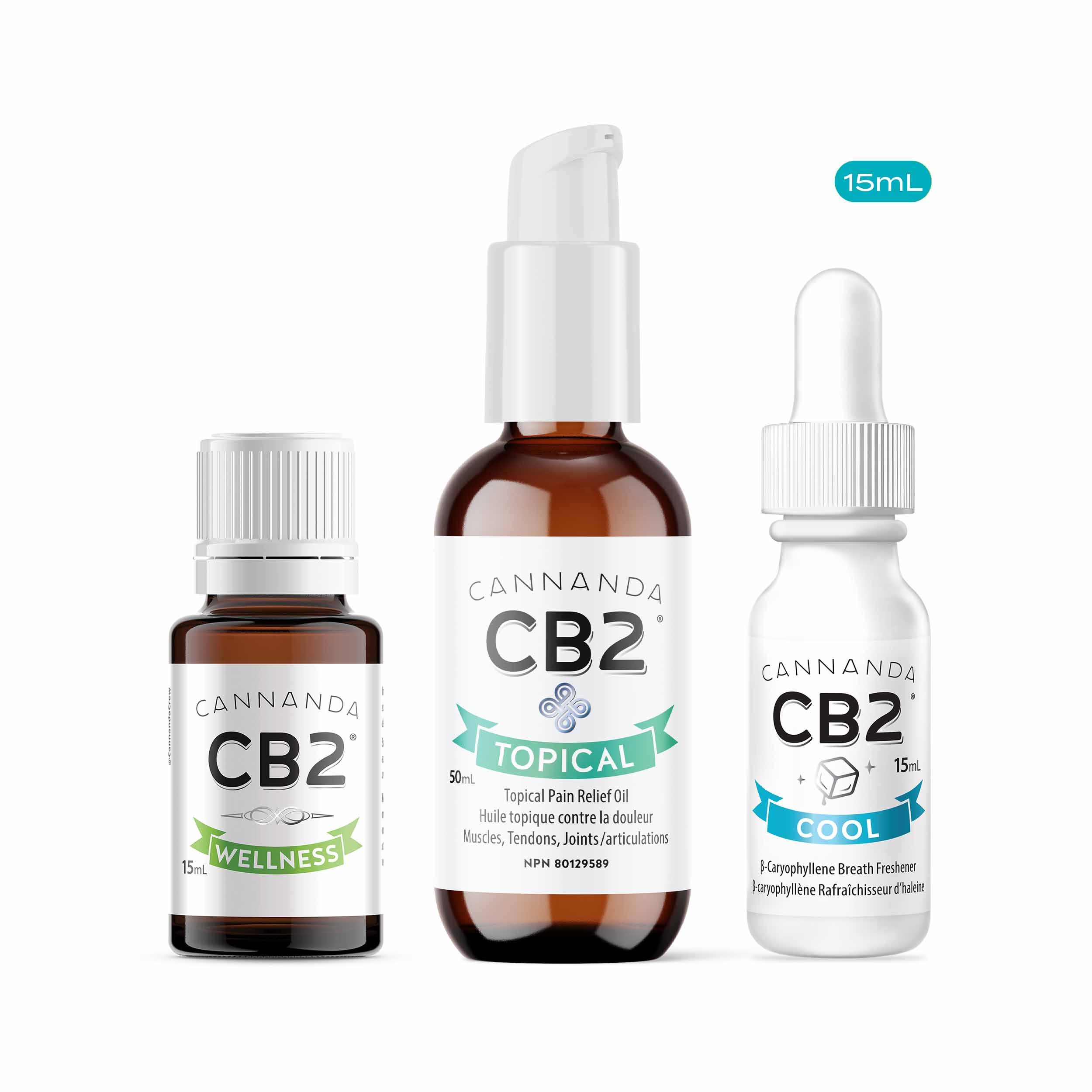
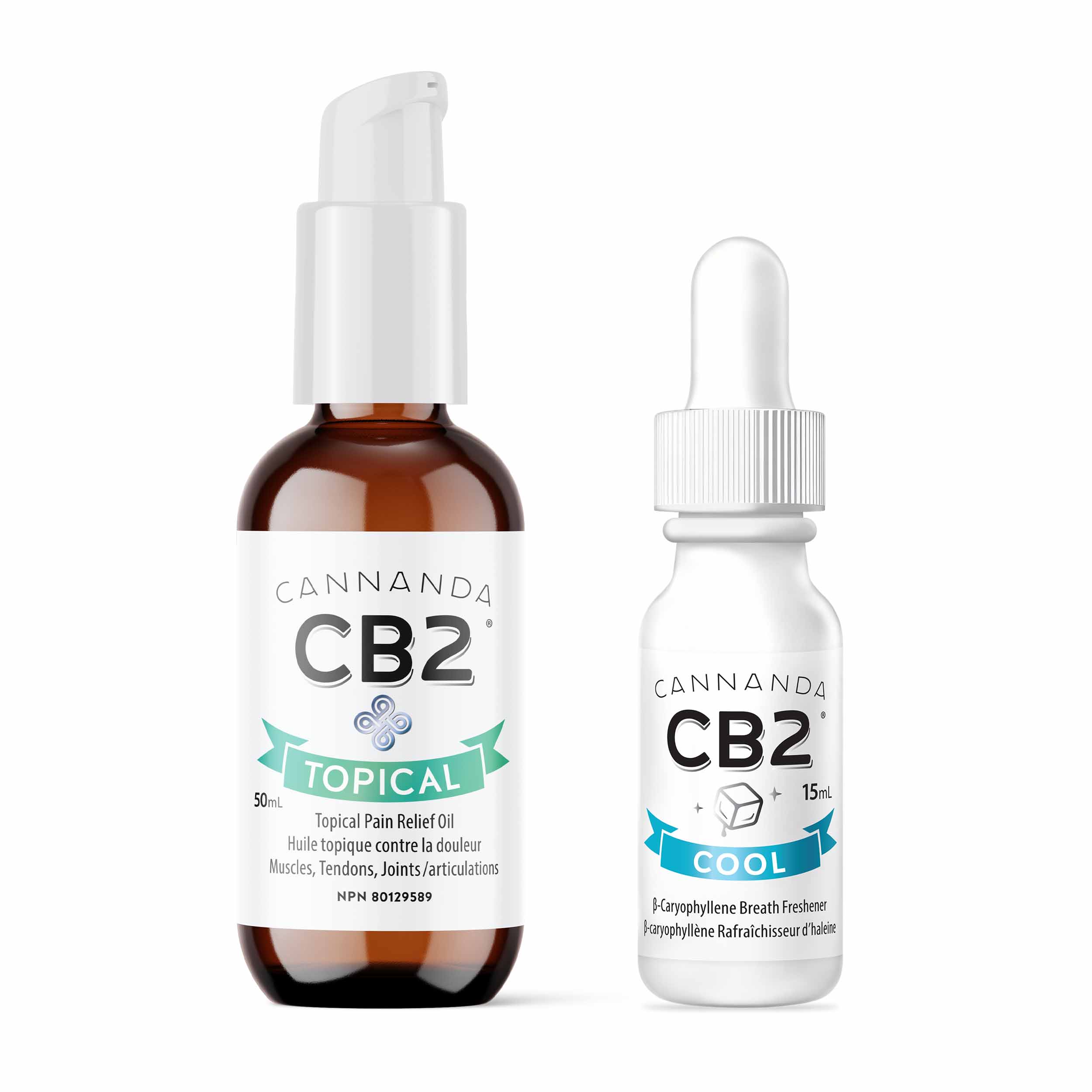
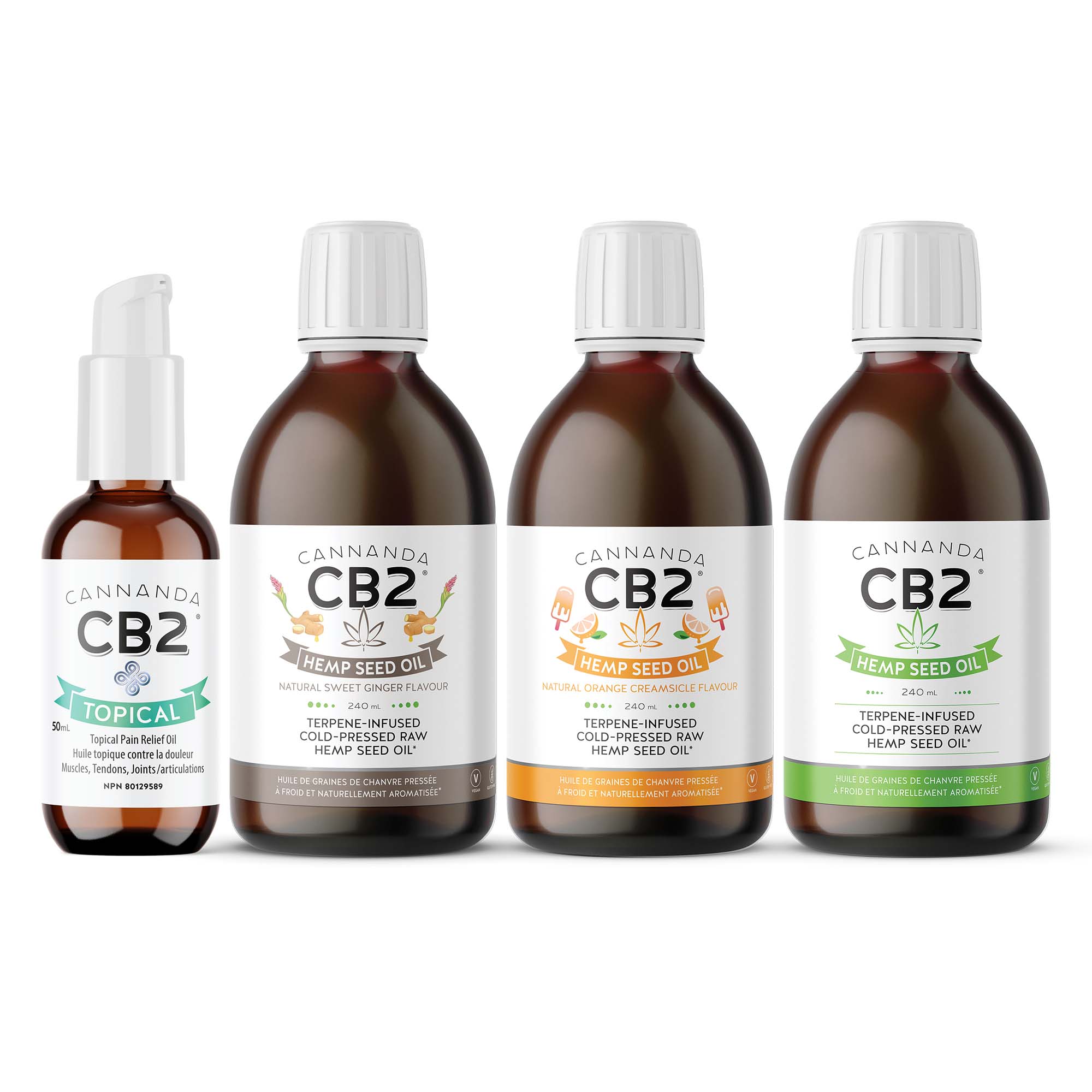
This is exactly why CB2 Topical Oil is built the way it is. If BCP is small enough to absorb into your skin and reach CB2 receptors, then everything else in that bottle is getting absorbed right along with it. There's no point using a well-designed active ingredient in a formula full of things you'd never actually eat.
Every ingredient in CB2 Topical Oil is food-grade. That's the same standard used for something that goes in your mouth, not a lower bar reserved for something you only rub on skin. If it's not food-grade, it doesn't go in the bottle.
The whole picture, in two parts:
- A small, active compound. BCP is sized right and built right to actually reach CB2 receptors instead of sitting uselessly on the surface.
- Food-grade everything else. Since absorption isn't selective, every other ingredient is held to a standard where absorption isn't a risk, because it's something your body already knows how to handle from food.
Most topical products only think about half of this. They either use an ineffective active ingredient that never really absorbs, or they use an absorbable active alongside ingredients that were never meant to enter your bloodstream in the first place. CB2 Topical Oil is built around both halves at once.
Why Formulation Still Matters
Not every BCP product delivers the same result. How BCP is carried into the skin changes how well it works.
- Oil-based carriers help BCP stay dissolved in something fat-friendly, since it needs that to move through skin
- Particle size matters here too. Smaller carrier droplets consistently outperform larger ones in getting BCP where it needs to go
This is why the carrier oil and the way a topical is made matters just as much as the BCP itself. A well-formulated product gives BCP the best possible shot at reaching those CB2 receptors instead of evaporating off the surface of your skin.
Frequently Asked Questions
Does beta-caryophyllene actually absorb through skin?
Yes. At 204.35 Daltons, BCP is well under the 500 Dalton size limit generally used to predict skin absorption, and it is fat-friendly, which skin needs for anything to pass through it. Multiple lab studies confirm BCP reaching the stratum corneum, epidermis, and dermis after topical application.
Is BCP the same as CBD when it comes to skin absorption?
No. CBD is a cannabinoid that works through several different pathways in the body. BCP is a sesquiterpene found in plants outside cannabis too, like black pepper and copaiba, and it works specifically by binding to CB2 receptors.
Can a topical BCP product get you high?
No. BCP binds to CB2 receptors, not CB1. CB1 is the receptor tied to the psychoactive effects people associate with cannabis. BCP does not activate CB1, so it works locally without any mind-altering effect. It is non-intoxicating.
If skin absorbs small molecules, does that mean toxins can get in too?
Yes. Skin absorption isn't selective for beneficial ingredients. Any molecule small enough and fat-friendly enough can pass through, whether it's something helpful or something you'd rather avoid. This is why the full ingredient list of a topical product matters, not just the active ingredient.
What makes a molecule too big to absorb through skin?
Once a molecule passes roughly 500 Daltons in weight, it generally cannot fit through the narrow spaces between skin cells in the stratum corneum. This is known as the 500 Dalton rule, and it's used across skin science as a first check on whether topical absorption is realistic.
The Bottom Line
Topical relief only works if the active ingredient actually gets into your skin, and that same porous wall lets in more than just the active ingredient. BCP is small enough to pass through and gets straight to work on CB2 receptors. But because absorption isn't selective, what surrounds that BCP matters just as much. That's why CB2 Topical Oil sticks to food-grade ingredients throughout. If you wouldn't eat it, it doesn't belong on your skin either.
References:
- Zhang et al., "Investigation of β-caryophyllene as terpene penetration enhancer: Role of stratum corneum retention," European Journal of Pharmaceutics and Biopharmaceutics, 2023
- Beta Caryophyllene-Loaded Nanostructured Lipid Carriers for Topical Management of Skin Disorders, MDPI Cosmetics, 2023
- β-caryophyllene Delivery Systems: Enhancing Pharmacokinetic and Stability, Phytomedicine, 2018
- Correlation between Skin Permeation Profile of Beta-Caryophyllene and Antiedematogenic Activity by Topical Nanoemulgels, Biomolecules, 2022