- Anyone interested in natural approaches to cellular energy and longevity
- People researching beta-caryophyllene (BCP) and its broader health effects
- Health-conscious individuals curious about how the endocannabinoid system connects to mitochondrial function
- Practitioners exploring terpene-based interventions for metabolic and neurological health
Beta-caryophyllene (BCP) connects to mitochondrial health through at least 11 distinct mechanisms, from protecting the membrane potential that drives ATP production to triggering the body's own antioxidant defenses. Most of this evidence comes from preclinical research, but the depth and consistency of the findings across independent studies is genuinely remarkable for a compound you can get from the spice rack in your kitchen.
Your Mitochondria Have a Favourite Terpene. It's in Black Pepper.
How beta-caryophyllene connects to 11 different mechanisms of mitochondrial protection, according to the latest preclinical research.
The Cell's Power Problem
Every cell in your body runs on energy. That energy gets made in tiny structures called mitochondria, and how well those mitochondria function affects basically everything. How you age. How you recover from stress. Whether your brain stays sharp. How well your heart keeps pumping. Even how your immune system responds to threats.
When mitochondria start underperforming, it's not like a light switch going off. It's more like a slow dimming. Energy production drops. Oxidative damage builds up. Cells get weaker or start dying off in ways they shouldn't. Over time, this pattern shows up in dozens of conditions, from neurodegenerative diseases to metabolic dysfunction to chronic fatigue.
So the question researchers have been asking for decades is: what can actually protect mitochondria? And increasingly, the research keeps pointing at something surprising. A terpene found in black pepper, cloves, and cannabis. One that happens to be the only dietary compound known to directly activate the CB2 cannabinoid receptor. Beta-caryophyllene, or BCP for short.
Here's what the science actually says about how it connects to mitochondrial health, pulled from a systematic review of the preclinical literature across 16 studies published between 2014 and 2026. Mitochondria have been a central focus of my work for a long time. I wrote Mitochondria and the Future of Medicine (Chelsea Green Publishing, 2018) specifically to bridge the gap between the research and what people can actually do about their cellular health, and it held an Amazon #1 bestseller ranking for several years. If you want to go deeper on mitochondrial science beyond BCP, that book is the place to start. However, research on BCP was too new at the time, so the topic never made it into the book. Now with more research, the picture is becoming clearer, so let's talk about what the studies say about this particular terpene.
A Terpene That Does a Lot More Than Smell Good
BCP has been known to food scientists for decades. It's a major aromatic compound in dozens of culinary herbs and spices, and it's been classified as "generally recognized as safe" (GRAS) by the FDA for use in food flavouring. Most people have consumed small amounts of it without ever knowing.
But in 2008, a landmark paper by Gertsch et al. in the Proceedings of the National Academy of Sciences changed how researchers thought about it. They discovered that BCP is a selective CB2 receptor agonist, meaning it binds to and activates the CB2 cannabinoid receptor the same way endogenous cannabinoids do, but without any of the intoxicating effects associated with CB1 receptor activation.
That discovery opened a door because CB2 receptors are found on immune cells, in the nervous system, and critically, on mitochondria themselves. Activating CB2 receptors triggers a cascade of downstream signalling that, as it turns out, converges on mitochondrial protection from multiple directions simultaneously.
The 11 Mechanisms: How BCP Protects Mitochondria
What follows is a breakdown of each mechanism identified in the research. These aren't speculative. They're documented in peer-reviewed journals across multiple independent research groups. The caveat, which we'll address at the end, is that virtually all of this evidence is preclinical.
Preserving the Mitochondrial Membrane Potential (ΔΨm)
Think of the mitochondrial membrane potential as the charge that drives ATP production. It's the electrochemical gradient across the inner mitochondrial membrane, and when it collapses, energy production stops. BCP directly restores this potential when it gets disrupted by toxins. In SH-SY5Y neuroblastoma cells exposed to MPP+ (a neurotoxin used to model Parkinson's disease), BCP treatment reversed the membrane potential collapse and maintained the gradient needed for ATP synthesis. The same effect was observed in C6 glioma cells under glutamate-induced excitotoxicity.
Evidence: Cell models (neuroblastoma, glioma)Protecting the Electron Transport Chain and TCA Cycle Enzymes
The tricarboxylic acid (TCA) cycle and the electron transport chain (ETC) are the two main biochemical systems mitochondria use to generate energy. In a rat model of isoproterenol-induced myocardial infarction (heart attack), BCP preserved both TCA cycle enzymes and respiratory chain enzymes that were otherwise wiped out by the injury. Transmission electron microscopy confirmed that BCP also reduced the structural damage to mitochondria themselves, not just the biochemical markers.
Evidence: Rat cardiac injury model (European Journal of Pharmacology, 2023)Reducing Mitochondrial Reactive Oxygen Species (ROS)
Mitochondria are the main source of reactive oxygen species (ROS, also known as "free radicals") in the cell. Some ROS is normal. Too much causes oxidative damage that feeds on itself. BCP attacks this problem from three directions at once. It directly scavenges free radicals, including terminating radical chain reactions through interactions with molecular oxygen. It suppresses NADPH oxidase 2 (Nox2) gene expression, reducing the enzymatic production of superoxide. And it restores mitochondrial antioxidant defenses, including glutathione (GSH) levels and glutathione peroxidase (GPx) activity.
Evidence: Multiple cell lines and animal modelsActivating the Nrf2/HO-1 Antioxidant Axis
Nrf2 is the body's master antioxidant switch. When activated, it moves into the cell nucleus and turns on an entire group of "phase 2" antioxidant enzymes, including heme oxygenase-1 (HO-1). This pathway is critical for mitochondrial defense against oxidative damage, and BCP has been shown to induce nuclear translocation of Nrf2 in multiple tissue types. Notably, the GSK-3β/Nrf2/HO-1 axis has been specifically implicated in BCP's protection against rotenone-induced neurotoxicity. Rotenone is a mitochondrial complex I inhibitor, so this connection is particularly meaningful (complex I is one of the sites of greatest ROS production, and inhibiting this will exacerbate the situation).
Evidence: Neuroscience and neurotoxicity modelsActivating AMPK Signalling
AMPK (AMP-activated protein kinase) is the cell's energy sensor. When energy gets low, AMPK fires up to restore balance. It's also a key upstream activator of mitochondrial biogenesis (generation of more healthy mitochondria) through the AMPK-PGC-1α axis. BCP stimulates AMPK phosphorylation through CB2 receptor-dependent calcium signalling. In hepatocytes, this AMPK activation also phosphorylated acetyl-CoA carboxylase 1 (ACC1), directly linking BCP's action to mitochondrial fatty acid oxidation and lipid metabolism.
Evidence: Hepatocyte models (Molecular Nutrition & Food Research, 2016)Upregulating PGC-1α for Mitochondrial Biogenesis
PGC-1α (peroxisome proliferator-activated receptor gamma coactivator 1-alpha) is the master regulator of mitochondrial biogenesis. When it gets upregulated, it drives nuclear respiratory factor activation, mitochondrial DNA transcription and replication, and oxidative phosphorylation complex assembly. In other words, it tells the cell to make more mitochondria and make them better. BCP upregulates PGC-1α in a CB2 receptor-dependent manner. It also appears to activate PPAR-γ in a ligand-independent manner through this PGC-1α upregulation.
Evidence: CB2 receptor-dependent signalling pathwayPPAR-α and PPAR-γ Activation
Peroxisome proliferator-activated receptors (PPARs) are nuclear receptors that regulate mitochondrial fatty acid β-oxidation, lipid homeostasis, and energy metabolism. BCP activates both PPAR-α and PPAR-γ isoforms. In the liver, BCP's interaction with PPAR and AMPK signalling reduces hepatic steatosis (fat accumulation in liver cells), which directly reflects improved mitochondrial lipid handling. This is a metabolic effect with significant downstream implications for conditions like non-alcoholic fatty liver disease.
Evidence: FASEB Journal (multiple studies, 2026)Mitochondrial Quality Control (Autophagy and Mitophagy)
The cell has a housekeeping system for dealing with damaged mitochondria. It's called mitophagy, and it's a specific form of autophagy (cellular self-cleaning) targeted at the mitochondria. BCP promotes mitochondrial quality control through regulation of apoptosis and autophagy pathways, including modulation of pro-apoptotic proteins (Bax, cleaved caspase-3) and anti-apoptotic proteins (Bcl-2) that govern mitochondrial outer membrane permeability. CB2 receptor signalling has also been shown to modulate mitophagy, mitochondrial fission/fusion dynamics, and mitochondrial biogenesis.
Evidence: Antioxidants and Pharmacological ResearchAnti-Ferroptotic Protection
Ferroptosis is a form of cell death driven by iron-dependent lipid peroxidation. It's particularly damaging to mitochondrial membranes, and it's become an area of intense research interest in cardiovascular and neurological disease. BCP has been shown to preserve mitochondrial morphology and function during ferroptosis induction in cardiomyocytes (heart cells). Interestingly, this effect appears to involve direct free-radical chain termination (not something many antioxidants are able to achieve). This is one of the more novel findings in the recent literature.
Evidence: Journal of Agricultural and Food Chemistry, 2024Mitochondrial Calcium Homeostasis
Calcium dysregulation inside mitochondria is one of the key triggers for mitochondrial permeability transition pore (mPTP) opening. When the mPTP opens inappropriately, it depolarizes the membrane, releases cytochrome c, and initiates cell death. BCP reduces elevated mitochondrial calcium ion levels observed in cardiac injury models. By helping to normalize calcium levels, it helps keep the mPTP closed and maintains mitochondrial structural integrity.
Evidence: European Journal of Pharmacology, 2023Suppressing Neuroinflammation-Mediated Mitochondrial Damage
Neuroinflammation is one of the leading indirect causes of mitochondrial damage in the brain. Activated microglia release cytokines (IL-6, IL-1β) that stress neuronal mitochondria and impair their function over time. BCP inhibits microglial activation and suppresses both NF-κB and p38 MAPK signalling pathways, reducing this cytokine burden. What makes this particularly relevant is that BCP crosses the blood-brain barrier and accumulates in brain regions, giving it site-specific mitoprotective capacity where it's most needed.
Evidence: Multiple neuroinflammation models (Antioxidants, 2021)The Common Thread: CB2 Receptor Agonism
The majority of these mitochondrial mechanisms connect back to one central action: BCP's role as a selective CB2 receptor agonist.
CB2 receptor activation triggers downstream signalling cascades, including AMPK, PGC-1α, Nrf2, and PPAR-γ, that converge on mitochondrial protection from multiple angles simultaneously. These aren't 11 unrelated things, but instead it's the activation of one receptor that sets off a coordinated cellular response that touches mitochondrial function at almost every level.
And because CB2 receptor activation avoids the intoxicating effects associated with CB1 receptor activation, BCP can engage this entire cellular process without any "high."
All of the evidence described in this article is preclinical, meaning it comes from cell culture experiments and animal models. No randomized controlled trials in humans have validated these specific mitochondrial effects. Human doses, bioavailability across different tissues, and tissue-specific effects remain undefined. This is an active and rapidly growing area of research, not an established clinical protocol. The science is compelling and the mechanistic logic is sound, but much more research is needed.
Practical Considerations If You're Using BCP
- Consistency matters. BCP's effects on transcription factors like Nrf2 and PGC-1α are cumulative. They're not acute responses. Regular, consistent use over weeks is likely more meaningful than occasional high doses.
- More isn't more. BCP's dose-response relationship is non-linear. At high concentrations, ceramide production can actually counteract the CB2-mediated anti-inflammatory benefits. Staying in the effective range, rather than pushing doses higher, is the smarter approach.
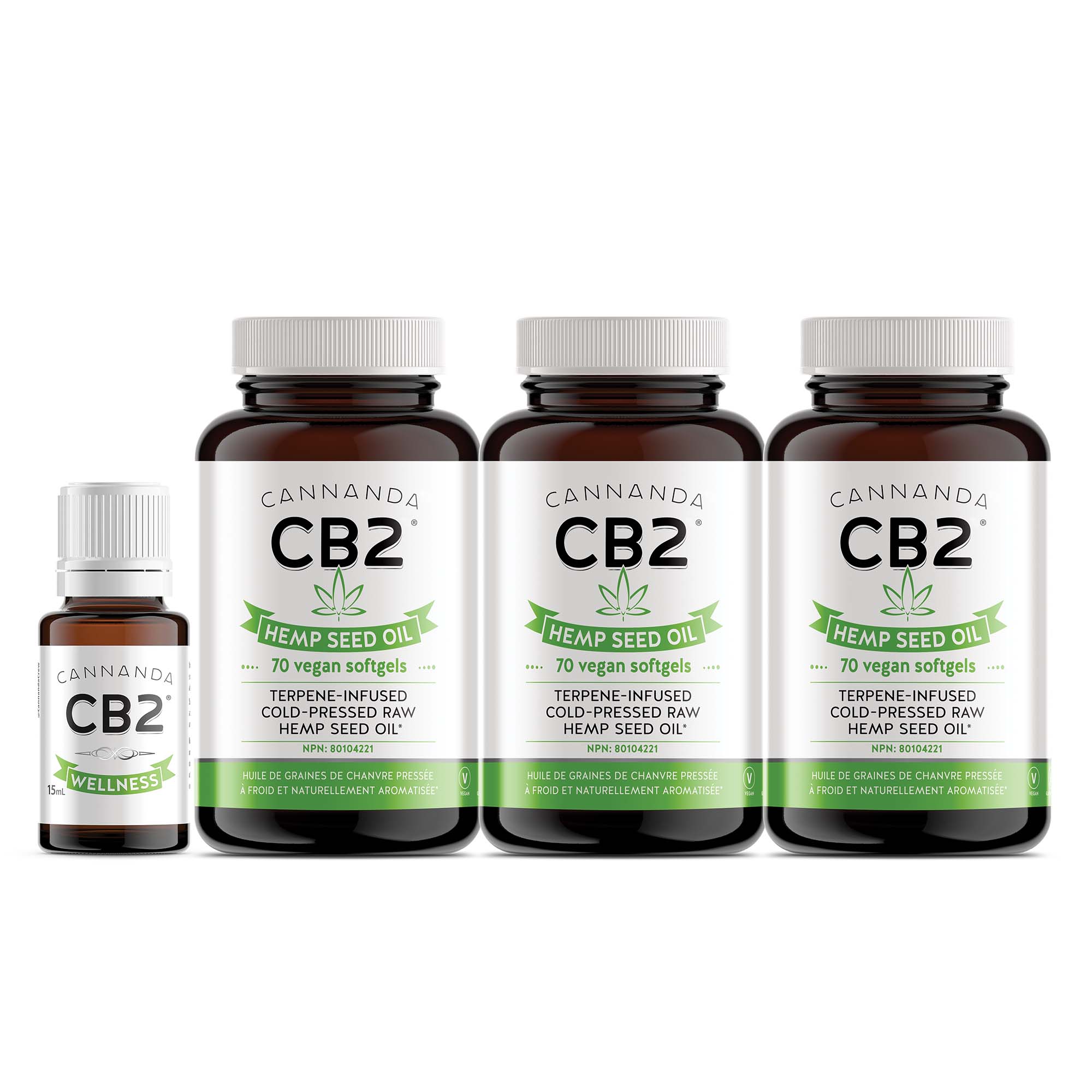
- Food-grade sourcing matters. BCP is a naturally occurring terpene in the food supply, which is part of why it has a strong safety profile. What many people don't realize is that BCP can also be produced synthetically in a laboratory. Synthetic BCP may carry residual chemical solvents or byproducts from the manufacturing process, which is a concern you simply don't have with naturally derived BCP extracted from plants. Cannanda CB2 oils use only natural, plant-sourced BCP, keeping it in line with the food-grade safety profile the research is built on.
- Pair it with an anti-inflammatory lifestyle. The research shows BCP working synergistically with metabolic and anti-inflammatory pathways. It's not a substitute for sleep, movement, and whole-food eating. It's a complement to them. Other mitochondrial nutrients and recommendations can be found in my book link to in the intro of this article.
Why CB2 Oil Works Better Than Isolated BCP
One thing worth understanding before you go looking for a BCP supplement is that not all BCP products are the same, and isolated BCP is not the optimal delivery format.
Cannanda CB2 oil formulation combines BCP with a strategically selected blend of other naturally-occurring GRAS-status terpenes. Why? Because terpenes don't work in isolation in nature, and they don't work best in isolation as a supplement either. The supporting terpenes in Cannanda CB2 oils work synergistically with BCP, each contributing complementary effects through overlapping and adjacent mechanisms. Some support absorption. Others contribute to stability. While others assist in efficacy. The result is a more complete response than you get from BCP alone.
Think of it like this: eating an orange gives you more than just vitamin C in isolation. The whole matrix of compounds works together in ways the isolated nutrient doesn't replicate on its own. The same logic applies here. CB2 oil is a whole-terpene formulation built around BCP as the lead active, not a single-ingredient capsule of extracted BCP.
This is also why the research base matters so much. CB2 oil was formulated with deep knowledge of both the terpene science and traditional botanical medicines. The synergy in the formula isn't accidental.
Cannanda created the original CB2 oil and holds the registered Cannanda CB2® trademark. Since then, other companies have started marketing products using the "CB2 oil" name to ride on the recognition that Cannanda built. These are not the same product. They don't use the same formulation, the same sourcing standards, or the same quality controls. Some don't even contain meaningful amounts of BCP.
If you're buying a CB2 oil, make sure it's the original. Cannanda is the only company with the registered Cannanda CB2® trademark and the formulation that the research and reputation are built on. Anything else is borrowing a name it has no claim to.
CB2 Oil: The Original BCP Supplement
Cannanda CB2 oil is the original beta-caryophyllene supplement, built around food-grade BCP from Canadian-sourced ingredients. It's 0% THC, 0% CBD, and non-intoxicating, giving you direct CB2 receptor support without anything you don't need.
Shop CB2 OilFrequently Asked Questions
References
- Iorio R, Celenza G, Petricca S. Multi-Target Effects of SS-Caryophyllene and Carnosic Acid at the Crossroads of Mitochondrial Dysfunction and Neurodegeneration. Antioxidants. 2022.
- Ullah H, Di Minno A, Santarcangelo C, Khan H, Daglia M. Improvement of Oxidative Stress and Mitochondrial Dysfunction by Beta-Caryophyllene: A Focus on the Nervous System. Antioxidants. 2021.
- Hashiesh HM, Sharma C, Goyal SN, et al. A Focused Review on CB2 Receptor-Selective Pharmacological Properties and Therapeutic Potential of Beta-Caryophyllene. Biomedicine & Pharmacotherapy. 2021.
- Bader Eddin L, Subramanya SB, Ojha S. Pharmacological, Molecular Mechanisms, and Therapeutic Potential of Beta-Caryophyllene and Beta-Caryophyllene Oxide. FASEB Journal. 2026.
- Wang G, Ma W, Du J. Beta-Caryophyllene (BCP) Ameliorates MPP+ Induced Cytotoxicity. Biomedicine & Pharmacotherapy. 2018.
- Assis LC, Straliotto MR, Engel D, et al. Beta-Caryophyllene Protects the C6 Glioma Cells Against Glutamate-Induced Excitotoxicity Through the Nrf2 Pathway. Neuroscience. 2014.
- Yovas A, Stanely SP, Ponnian SMP. Protective Effects of Beta-Caryophyllene on Mitochondrial Damage and Cardiac Hypertrophy Pathways in Isoproterenol-Induced Myocardial Infarction. European Journal of Pharmacology. 2023.
- Li Y, Wu W, Song Y, et al. Beta-Caryophyllene Confers Cardioprotection by Scavenging Radicals and Blocking Ferroptosis. Journal of Agricultural and Food Chemistry. 2024.
- Rathod SS, Agrawal YO. Beta-Caryophyllene (CB2 Agonist) Mitigates Rotenone-Induced Neurotoxicity and Apoptosis in SH-SY5Y Neuroblastoma Cells. Naunyn-Schmiedeberg's Archives of Pharmacology. 2025.
- Baradaran Rahimi V, Askari VR. A Mechanistic Review on Immunomodulatory Effects of Selective Type Two Cannabinoid Receptor (CB2R) Agonists. BioFactors. 2022.
- Kamikubo R, Kai K, Tsuji-Naito K, Akagawa M. Beta-Caryophyllene Attenuates Palmitate-Induced Lipid Accumulation Through AMPK Signaling by Activating CB2 Receptor in Hepatocytes. Molecular Nutrition & Food Research. 2016.
- Song L, Liang J, Wang W, et al. Global Trends in Research of Mitochondrial Biogenesis over Past 20 Years: A Bibliometric Analysis. Oxidative Medicine and Cellular Longevity. 2022.
- Li PA, Hou X, Hao S. Mitochondrial Biogenesis in Neurodegeneration. Journal of Neuroscience Research. 2017.
- Youssef DA, El-Fayoumi HM, Mahmoud MF. Beta-Caryophyllene Alleviates Diet-Induced Neurobehavioral Changes in Rats: The Role of CB2 and PPAR-γ Receptors. Biomedicine & Pharmacotherapy. 2019.
- Sharma C, Al Kaabi JM, Nurulain SM, et al. Polypharmacological Properties and Therapeutic Potential of Beta-Caryophyllene: A Dietary Phytocannabinoid of Pharmaceutical Promise. Current Pharmaceutical Design. 2016.
- Malheiro RF, Carmo H, Carvalho F, Silva JP. Cannabinoid-Mediated Targeting of Mitochondria on the Modulation of Mitochondrial Function and Dynamics. Pharmacological Research. 2023.
- Gertsch J, et al. Beta-Caryophyllene is a Dietary Cannabinoid. Proceedings of the National Academy of Sciences. 2008. doi:10.1073/pnas.0803601105