Is Beta-Caryophyllene (BCP) Safe? Side Effects and Safety Research
FDA GRAS status. No drug interactions. No mutagenic potential. An LD50 higher than table salt. Here's what the formal safety research actually shows.
You're considering CB2 oil, or you're already using it and someone has asked you about safety. You want the actual evidence, not reassurances. This article covers the formal toxicity studies, the regulatory approvals, what "no drug interactions" really means, and how BCP's safety profile stacks up against the common OTC medications many people already take without a second thought.
Beta-caryophyllene is one of the safest natural compounds with a supplement application. It has FDA GRAS status and EFSA approval, a 90-day NOAEL of 700 mg/kg/day with no adverse effects at any dose tested, an acute LD50 above 5,000 mg/kg (higher than table salt), no mutagenic potential, no CYP450 drug interactions at supplement doses (with one exception for those on medications with a narrow therapeutic window), and no documented side effects at recommended use levels. Cannanda's recommended daily range of 60–120 mg BCP/day sits many orders of magnitude below any level of toxicological concern.
When considering any health supplement, the safety question should come before everything else. With beta-caryophyllene (BCP), this is one of the easier questions in natural health to answer because the formal safety evidence is unusually thorough, entirely consistent, and the regulatory conclusion is the same across multiple jurisdictions: BCP is safe.
This isn't marketing language. It's a straightforward reading of multiple independent toxicity studies, the FDA's GRAS listing, and the European Food Safety Authority's approval, all of which tell the same story. What follows is what those studies actually found, how BCP compares to common OTC medications most people take without hesitation, and the specific population questions that matter most for real-world use.
FDA GRAS status: What it means and why it matters
GRAS (Generally Recognized As Safe) is the FDA's designation indicating that qualified scientific experts have reviewed the available safety evidence and concluded that a substance is safe for its intended use. It is not easily obtained, and it carries meaningful regulatory weight.
BCP has been GRAS-listed as a food flavoring ingredient under FDA 21 CFR 172.515 for decades, used commercially in foods and beverages throughout this time without safety issues. It is also approved by the European Food Safety Authority (EFSA) as a food additive and flavoring agent. Both agencies have separately evaluated the evidence and reached the same conclusion.
CBD's self-affirmed GRAS status was revoked by the US FDA. The FDA concluded that CBD does not meet the GRAS standard due to unresolved safety concerns, including questions about liver toxicity at higher doses and the absence of long-term human safety data. CBD is not currently approved as a food ingredient in the US.
BCP's GRAS status has never been challenged. It has been a recognized food ingredient for decades, is present in countless foods consumed globally without concern, and its formal safety evidence has been independently reviewed by both FDA and EFSA. The regulatory contrast between BCP and CBD is one of the clearest practical safety differentiators between the two.
What the formal toxicity studies actually found
How BCP's safety compares to common OTC medications
Most people accept ibuprofen, aspirin, and acetaminophen without thinking twice about safety. Comparing BCP's safety profile to these familiar medications puts the evidence in perspective.
| Safety factor | Ibuprofen (Advil) | Acetaminophen (Tylenol) | Aspirin | BCP |
|---|---|---|---|---|
| GI damage risk | Yes, ulcers, bleeding | Low | Yes, GI irritation | None documented, BCP supports GI health and promotes intestinal healing |
| Liver toxicity risk | Yes, with overuse | Yes, leading cause of acute liver failure | Possible with overuse | None in formal studies, BCP actively protects the liver |
| Kidney toxicity risk | Yes, with regular use | Yes, with overuse | Possible | None in formal studies, BCP has kidney-protective properties |
| Cardiovascular risk | Yes, increases CVD risk | Possible with long-term use | Bleeding risk | None documented, BCP supports aspects of cardiovascular health |
| CYP450 drug interactions | Yes, multiple | Yes, multiple | Yes, multiple | None at supplement doses* |
| Mutagenic potential | No | No | No | No, formally tested |
| GRAS food ingredient status | No | No | No | Yes, FDA and EFSA |
*Except for those on a medication with a narrow therapeutic window, who should talk to a doctor before starting.
The comparison isn't to suggest BCP replaces these medications in all contexts, they serve different immediate purposes. It is to illustrate that BCP's safety profile is more favorable than products most people already use regularly without concern.
No drug interactions: What that means in practice
The absence of drug interactions is one of BCP's most practically important safety features, and it's worth understanding the mechanism behind it.
The CYP450 enzyme pathway: why CBD has interactions and BCP doesn't
Most pharmaceutical medications are metabolized (broken down) by a family of liver enzymes called cytochrome P450 (CYP450), particularly CYP3A4 and CYP2D6. When a compound inhibits these enzymes, it slows the breakdown of any medication processed by that same pathway, causing drug blood levels to rise unpredictably, potentially producing toxicity or reduced efficacy. This is why grapefruit juice carries medication warnings.
CBD inhibits CYP3A4 and CYP2D6, which is why it carries documented drug interaction concerns. BCP does not affect these enzyme pathways at supplement doses. It reaches its target (CB2 receptors) through a mechanism that doesn't involve competing with medication metabolism.
This doesn't mean BCP has zero possible interactions at very high doses, no compound can claim that with absolute certainty. At Cannanda's recommended 60–120 mg/day range, no adverse drug interactions have been documented or are mechanistically expected. One exception applies regardless of dose: if you're on a medication with a narrow therapeutic window, such as warfarin, lithium, or digoxin, talk to your doctor before starting BCP.
BCP safety for specific populations
No CYP450 interactions at recommended doses. Compatible with statins, SSRIs, antidepressants, blood pressure medications, NSAIDs, and most common prescriptions. One exception: if you're on a medication with a narrow therapeutic window (such as warfarin, lithium, or digoxin), talk to your doctor before starting. Always inform your healthcare provider about supplements you're taking.
0% THC. 0% CBD. No cannabinoids. BCP is a terpene with no banned substances under WADA or any sport-specific anti-doping codes. Safe for competitive athletes subject to drug testing.
No kidney or liver toxicity risk makes BCP particularly suitable for older adults, who are more vulnerable to the organ-damaging side effects of NSAIDs and acetaminophen. No CYP450 interactions are a significant advantage given polypharmacy is common in this group, though this is also the group most likely to be on a narrow-therapeutic-window medication, so a quick check with a doctor or pharmacist before starting is worthwhile.
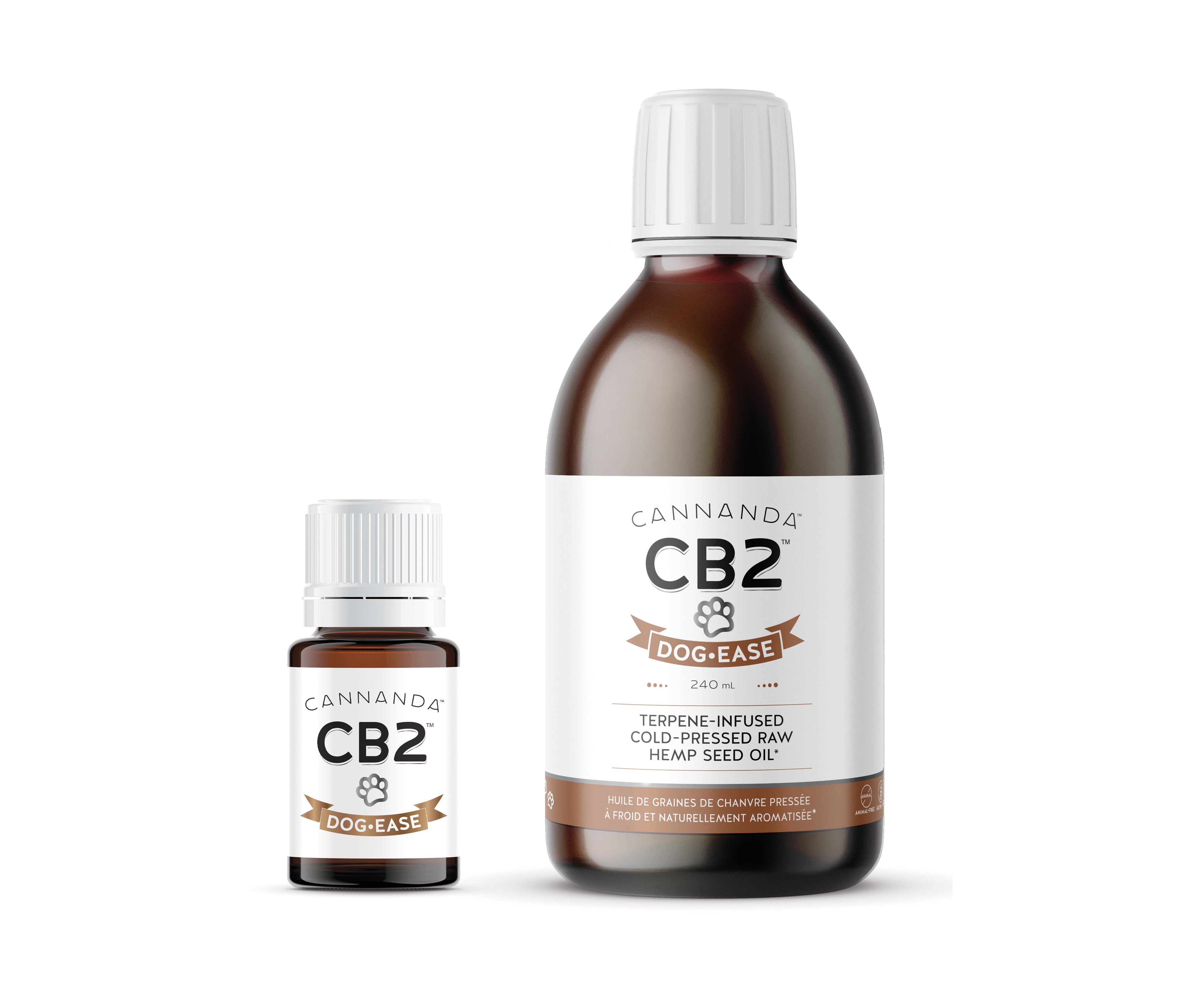
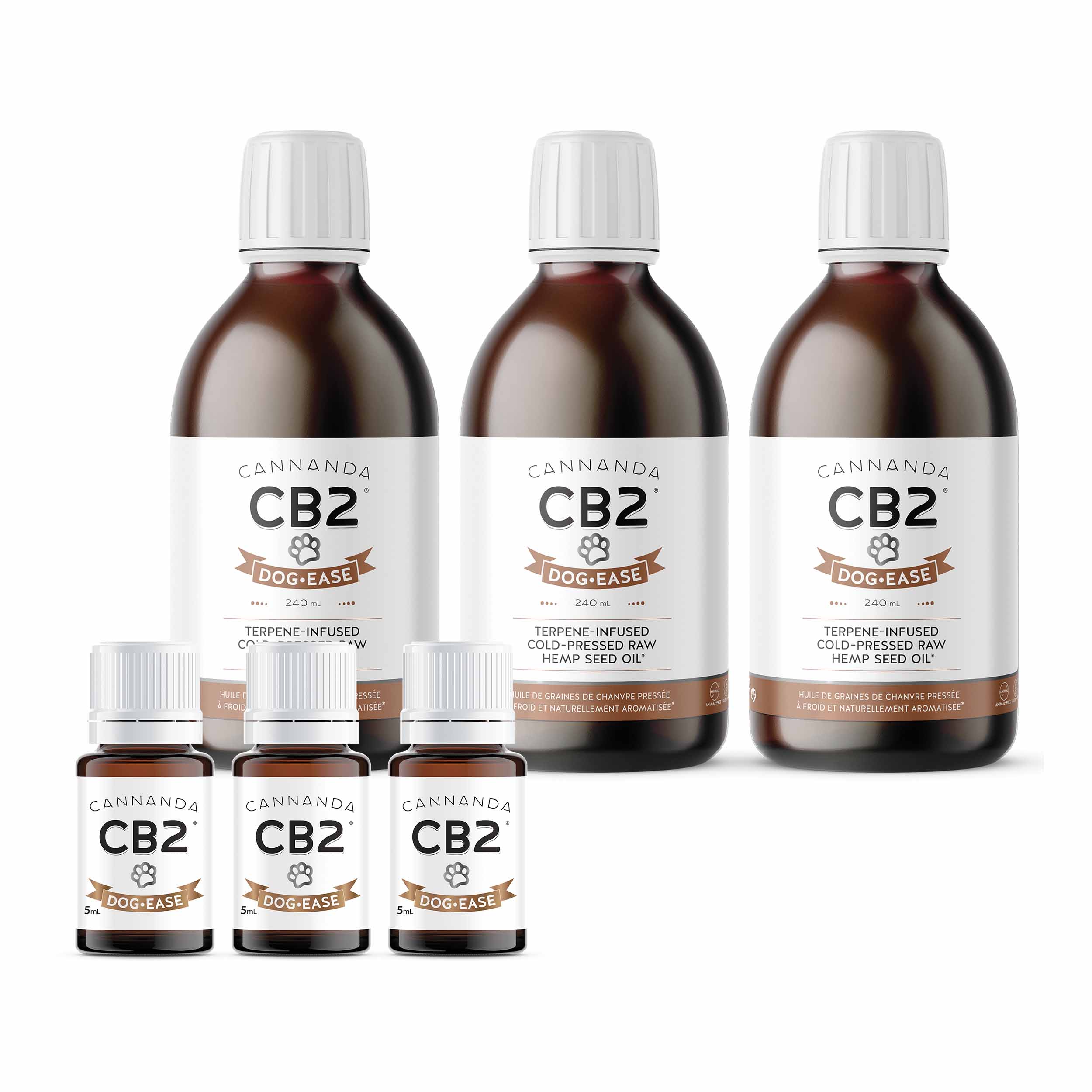
Cannanda Dog-Ease is Health Canada Veterinary Health Product (VHP) approved, a formal safety and efficacy evaluation for canine use. The safety profile in animals mirrors human research findings. Learn why CB2 oil is safer for dogs than CBD.
BCP is naturally present in many foods consumed during pregnancy. No adverse effects have been reported. However, formal safety studies specifically for pregnant or nursing women have not been conducted. Cannanda recommends consulting a healthcare provider before supplementing during these periods.
BCP is present in many foods children eat. Formal pediatric supplementation studies have not been conducted. Cannanda CB2 products are formulated and dosed for adults. Consult a pediatric healthcare provider before giving any concentrated supplement to children.
Side effects: What the evidence shows
At recommended supplement doses, BCP has no documented side effects. Specifically, it does not cause:
- Drowsiness or sedation
- Cognitive impairment or intoxication (BCP does not activate CB1 receptors)
- Digestive upset or GI irritation
- Appetite changes
- Dry mouth
- Elevated liver enzymes
- Changes in heart rate or blood pressure
The only side effect noted in the literature is mild skin irritation in a small subset of individuals with sensitive skin or known terpene allergies when applying highly concentrated BCP topically. This is relevant for Cannanda's topical products and not for oral supplementation. A simple patch test on a small skin area screens for this before broader application.
Safe for long-term use: Why this is different from most supplements
Many supplements carry uncertainty about long-term daily use because they are synthesized compounds or isolated extracts with limited long-term human data. BCP is different in a fundamental way: it is not new to the human body.
BCP is a naturally occurring compound present in dozens of foods humans have consumed throughout evolutionary history, black pepper, cloves, oregano, rosemary, cinnamon, hops, and many others. Every time you grind black pepper over a meal, eat a clove-spiced dish, or season with oregano, you consume BCP in small amounts. Supplementing with a concentrated form gives your body more of a compound it has been processing safely for its entire existence.
The 28-day and 90-day formal toxicity studies confirm no adverse effects with sustained daily dosing at levels far above any supplement recommendation. No studies suggest any concern with long-term daily BCP supplementation at the doses used in Cannanda CB2 products.
Quality matters for safety: What authentic Cannanda CB2 oil guarantees
The safety data reviewed in this article applies to pure, properly extracted BCP. Counterfeit CB2 oils on the market have been found to contain heavy metals, pesticide residues, and solvent residues, contaminants not present in authentic Cannanda CB2 oil and not reflected in BCP's formal safety profile.
- Every batch of Cannanda CB2 oil is third-party tested for heavy metals, pesticides, yeast, mould, and solvents
- BCP is extracted by steam distillation only, no organic solvents, no processing aids, no chemical residues
- Every ingredient carries FDA GRAS status as a food ingredient
- Over 95% of raw materials are sourced within Canada under stringent quality standards
- Formulated by Dr. Lee Know, ND, publicly accountable and professionally credentialed
- Money-back guarantee for first-time buyers, no-hassle returns if CB2 oil doesn't deliver results
The most safety-documented natural CB2 supplement available
FDA GRAS status. Third-party tested every batch. No drug interactions. No mutagenic potential. Safer by formal toxicology than table salt, and backed by a money-back guarantee.
Frequently Asked Questions
Is beta-caryophyllene safe to take daily?
Yes. BCP has been assessed for long-term daily safety through 28-day and 90-day toxicity studies showing no adverse effects at any dose tested. Because BCP is a naturally occurring food compound present in black pepper, cloves, and oregano, the human body is already accustomed to processing it. There are no studies suggesting concern with long-term daily use at supplement doses.
Does BCP interact with medications?
No adverse drug interactions have been documented at Cannanda's recommended doses. One exception: if you're on a medication with a narrow therapeutic window, such as warfarin, lithium, or digoxin, talk to your doctor before starting. Unlike CBD, which inhibits CYP450 liver enzymes that metabolize most medications, BCP does not affect this enzyme pathway at supplement doses. This makes it compatible with the broadest range of prescription medications, including statins, blood pressure medications, antidepressants, SSRIs, and most common prescriptions. Always inform your healthcare provider about supplements you take.
What are the side effects of beta-caryophyllene?
At recommended supplement doses, no side effects have been documented. BCP does not cause drowsiness, digestive upset, cognitive impairment, appetite changes, or any of the adverse effects common to pharmaceutical anti-inflammatory or pain medications. The only side effect noted in the literature is mild skin irritation in some individuals with sensitive skin when applying highly concentrated BCP topically, a simple patch test screens for this.
What is BCP's GRAS status and what does it mean?
GRAS (Generally Recognized As Safe) is the FDA's designation that qualified scientific experts have reviewed the safety evidence and concluded a substance is safe for its intended use. BCP has been GRAS-listed as a food flavoring ingredient for decades under FDA 21 CFR 172.515, and is also approved by the European Food Safety Authority as a food additive. By contrast, CBD's self-affirmed GRAS status was revoked by the FDA. BCP's regulatory standing has never been challenged.
How does BCP's safety compare to ibuprofen or acetaminophen?
BCP's safety profile is substantially more favorable. Ibuprofen carries risks of GI bleeding, kidney damage, and cardiovascular events. Acetaminophen is a leading cause of acute liver failure when overused. Both have CYP450 drug interactions and documented organ toxicity risks with regular use. BCP has no GI damage risk, no organ toxicity in formal studies, no liver effects, and no documented drug interactions at supplement doses (aside from the narrow therapeutic window exception noted above). Its acute LD50 (above 5,000 mg/kg) is higher than table salt's (~3,000 mg/kg) and aspirin's (~200 mg/kg).
Is BCP safe during pregnancy or breastfeeding?
No adverse effects from BCP-containing foods during pregnancy have been reported, and BCP is present in many commonly consumed spices and herbs. However, formal safety studies on BCP supplementation during pregnancy or breastfeeding have not been conducted. Out of an abundance of caution, Cannanda recommends consulting a healthcare provider before taking concentrated supplements during these periods.
Is BCP safe for drug-tested athletes?
Yes. Cannanda CB2 oil contains 0% THC and 0% CBD. BCP is a pure terpene with no cannabinoid classification and no banned substances under WADA or any sport-specific anti-doping codes. Cannanda CB2 oil products are safe for competitive athletes subject to drug testing.
Is it possible to take too much BCP?
At recommended supplement doses, BCP has an extremely wide safety margin. The 90-day NOAEL was 700 mg/kg/day in rats, the highest dose tested. Converting to a human equivalent suggests safety margins many times higher than Cannanda's recommended 60–120 mg/day range. The gap between a typical daily dose and any level of toxicological concern is substantial.
Can children take BCP supplements?
BCP is naturally present in many foods children eat. Formal pediatric supplementation studies have not been conducted. Cannanda CB2 products are formulated and dosed for adults. Consult a pediatric healthcare provider before giving any concentrated supplement to children.
References
- Schmitt D, Levy R, Carroll B. (2016). Toxicological Evaluation of β-Caryophyllene Oil. International Journal of Toxicology, 35(5), 558–567.
- Oliveira GLS, et al. (2018). Non-clinical toxicity of β-caryophyllene, a dietary cannabinoid. Regulatory Toxicology and Pharmacology, 92, 173–181.
- Clemens KJ, et al. (2019). Dietary administration of β-caryophyllene and its epoxide to Sprague-Dawley rats for 90 days. Food and Chemical Toxicology, 133, 110775.
- FDA Code of Federal Regulations, Title 21, Section 172.515. (BCP GRAS status as food flavoring.)
- EFSA Panel on Food Additives and Flavourings. (Various). Assessment of β-caryophyllene as a flavoring substance. European Food Safety Authority.
- Gertsch J, et al. (2008). Beta-caryophyllene is a dietary cannabinoid. PNAS, 105(26), 9099–9104.